
When a child gags on a new food, it can feel alarming. Is this something that your child is doing? Or something that is happening to them?
A gag is an involuntary reflex. As a registered dietitian specializing in extreme picky eating and ARFID, I work with many families whose child gags on new foods. Gagging is often a normal response to an unfamiliar taste, smell, or texture. When it happens often and interferes with eating, it can point to sensory, motor, or medical factors that deserve a closer look.
One 11-year-old I worked with gagged when almost any non-preferred food was put in front of him. His parents were worried enough that they stopped offering anything outside his safe foods. The gagging stopped, but so did any chance for him to get comfortable with something new. Together, we brought new foods back in small, intentional exposures and paired them with coping strategies he could use when he felt a gag starting. Over time, his gagging became less frequent.
This post covers why a child gags when trying new foods, how to tell gagging from choking, when gagging is a red flag, and low-pressure ways to help at home. It is educational and not a substitute for an evaluation by your child’s doctor.
Why a Child Gags When Trying New Foods
Gagging is the body’s way of protecting the airway. When something in the mouth feels wrong, too big, too lumpy, too slippery, or simply unfamiliar, the gag reflex pushes it forward and away from the throat.
Many kids gag when a new food feels, smells, or tastes unfamiliar. Occasional gagging that passes quickly is usually part of learning to eat.
Gagging that happens often, leads to vomiting, or causes a child to only eat a small list of foods is different. That pattern may be a sign of sensory processing differences, oral motor skills challenges, or medical conditions worth checking out with your child’s pediatrician.

Is It Gagging or Choking
Gagging vs choking is the fear underneath many conversations about gagging, so let’s clearly distinguish the two:
Gagging is noisy. A child who is gagging may cough, sputter, retch, turn red, or have watery eyes. Their tongue pushes forward. In most cases, they can work the food forward on their own.
Choking is often silent. A child who is choking may not be able to breathe, cry, cough, or speak. Their skin may turn pale or bluish. The airway is blocked.
Here is what to do in each case:
- If your child is gagging: stay calm and close by. Let them work the food forward. Avoid reaching into their mouth, since a finger can push food farther back.
- If your child is choking: call 911 and begin the first aid steps for choking right away.
Every parent and caregiver benefits from an infant and child CPR class. Many hospitals, the American Red Cross, and the American Heart Association offer them. Knowing exactly what to do in an emergency makes it much easier to stay calm through ordinary gagging.
Why Does A Child Gag When Trying New Foods
There is rarely one single reason. Several of these often overlap in the same child.
An Unfamiliar Texture
Texture sensitivities are unique to the individual, but mixed textures, slimy foods, lumpy foods, and some crunchy foods are frequent triggers. Mixed textures like yogurt with fruit pieces, soup with chunks, or pasta with sauce can feel complicated and overwhelming. A child might gag just from thinking about eating those foods.
Strong Smells
Smell and taste are tightly linked. For some children, a strong odor triggers gagging before the food reaches their lips, or even from across the room. If this sounds like your child, this guide for kids who gag at food smells covers what this is about and how you can help your child in depth.
New Tastes or Flavors
A bitter, sour, or spicy flavor can surprise a child’s mouth. Kids are born preferring sweet and salty tastes, so stronger flavors can register as a warning signal at first.
A Sensitive Gag Reflex
In babies, the gag reflex is triggered farther forward on the tongue. It gradually moves back as they gain experience with different foods. Some children keep a more sensitive gag reflex longer than others. This isn’t behavior, it’s a physical response.
Sensory Processing Differences
Sensory processing is how the brain takes in and organizes information from the senses. Some children register textures, smells, temperatures, and sights more intensely than others. For them, a new food can feel genuinely overwhelming. Sensory processing differences are more frequent in autistic children and children with ADHD, but any child can have them. Learn more about sensory issues with food.
Oral Motor Skills
Oral motor skills are the movements of the lips, tongue, and jaw that let a child bite, chew, and move food around the mouth. A child who has trouble chewing or moving food to the side of the mouth may gag on foods that require more work, like meat, raw vegetables, or dry breads. Gagging can be a sign that the food is a step beyond the motor skills they have right now.
Past Negative Experiences With Food
A choking scare, painful reflux, or a stretch of being pressured to eat can teach a child that eating is unsafe. The body remembers. Gagging can become an early warning response, even when the food in front of them is perfectly safe.
Anxiety Around Mealtimes
Worry makes the body tense, and a tense body gags more easily. A child who is anxious about what is on the plate, or about being asked to take a bite, is more likely to gag on new foods. A calm mealtime and clear expectations lowers that baseline.
Medical Conditions
Some medical conditions make gagging more likely, including reflux, enlarged tonsils, and swallowing difficulties. If gagging is frequent or comes with pain, coughing, or vomiting, talk to your child’s doctor to rule out a medical cause.
Is Gagging A Sign Of Picky Eating
Gagging happens with many picky eaters, but it shouldn’t automatically be labeled picky eating. It helps to know where your child’s eating fits:
- Typical picky eating: a child prefers some foods over others but still eats a variety, and the list usually grows with time.
- Food neophobia: a normal, developmental fear of new foods. It tends to peak in the toddler and preschool years.
- Food aversion: a strong, lasting avoidance of a specific food or group of foods, often tied to texture or a past bad experience. Read more on what is food aversion and see how to help children with food aversions.
- ARFID: Avoidant/Restrictive Food Intake Disorder is an eating disorder that goes beyond picky eating. Children with ARFID may only eat a very short list of foods or react strongly to specific textures, which impacts their growth, nutrition, or daily life.
A child who gags on new foods once in a while, but eats a reasonable variety, is in a very different place than a child who gags on everything outside a handful of safe foods. The second pattern deserves professional support.
What Can Parents Do When A Child Gags When Trying New Foods
The goal is not to stop gagging by getting more food in. It’s to help your child’s body feel safe around new foods, so the reflex has less reason to fire.
Stay Calm and Keep Your Reaction Neutral
Kids watch faces. A gasp or a worried look tells a child that something dangerous just happened. Keep your voice even and your body relaxed. Try: “Your body is working that bite out. You’re okay.” Then move the conversation on.
Teach Them It’s OK To Spit Food Out
Spitting out a food is a safe exit, not bad manners. Put a napkin or a small “spit bowl” at the table and show your child how to use it. Try: “If a bite doesn’t feel right, you can put it in the bowl.” Kids who know they don’t have to eat a food are often more willing to try it.
Take the Pressure Off
Pressure includes the obvious things, like bribes and “one more bite,” and the subtle ones, like hovering, praise for every bite, or comparing siblings. All of it raises anxiety, and anxiety makes gagging more likely. Try: “You don’t have to eat it. It can just sit on your plate.”
Start Small
Offer a tiny portion of a new food, a single pea or a fingertip of sauce, next to a safe food your child eats every day. A small amount feels manageable. The safe food is not a reward. It’s a foundation.
Change the Texture or Preparation, Not the Food
If your child gags on a food, try a different version of it before giving up on it. Roasted carrots instead of raw. Ground beef instead of steak. Smooth applesauce before apple slices. Small changes in texture can make the same food far easier for the mouth to manage.
Let Kids Explore Food Without Eating It
Kids don’t need to swallow a food to learn about it. Touching, smelling, stirring, and cooking together all count as practice. Try: “Can you help me wash these? What do they feel like?” Every interaction builds familiarity, and familiarity lowers the gag response over time.
Use Food Chaining To Build From Familiar Foods
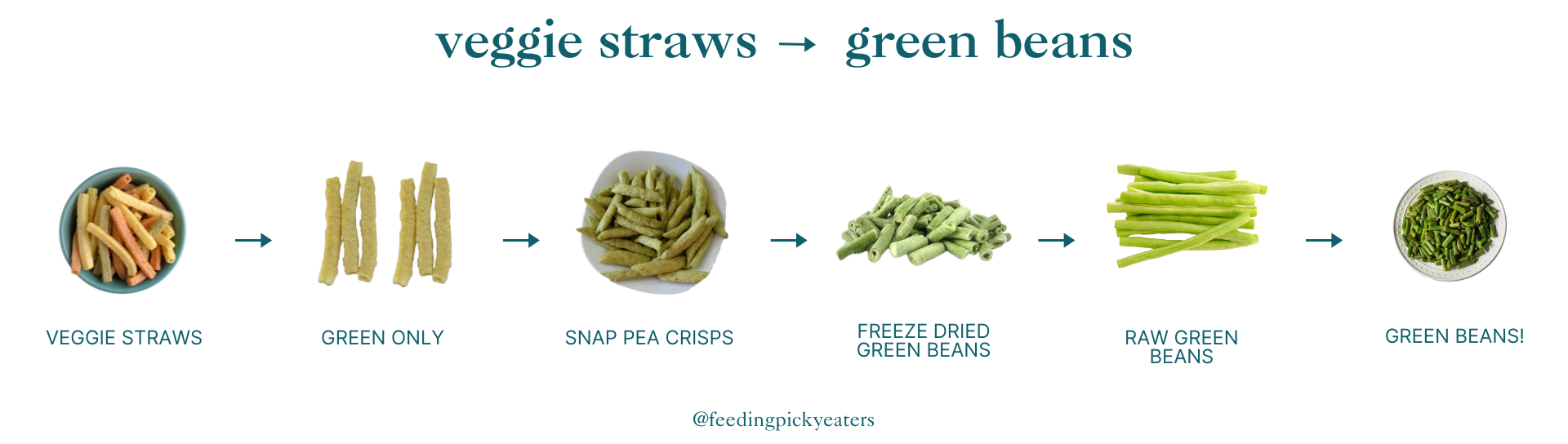
Food chaining means moving from a food your child accepts to a new food through small, similar steps. A child who eats one brand of chicken nugget might try another brand, then a homemade nugget, then a breaded chicken strip. Each link changes only one thing at a time. Learn how it works in this guide to food chaining.
Offer Repeated Exposure Over Time
Repeated exposure means offering a food many times, in a low-pressure way, without expecting it to be eaten. It can take many exposures before a food feels familiar. A child who gags on a food in October may calmly touch it by December. That is real progress. For more strategies, read how to get a picky eater to try new foods.
In my practice, the change that makes the biggest difference for families is taking the pressure off completely. Once a child trusts that no one will push the next bite, their body has room to relax, and gagging often starts to ease.
You can find more strategies to help your child feel more comfortable with new foods in these picky eater tips.
When To Get Help for Gagging
Talk to your child’s pediatrician if you notice any of these red flags:
- Gagging that often leads to vomiting
- Coughing or choking during meals
- A wet or gurgly voice after eating or drinking
- Poor weight gain, weight loss, or slowed growth
- A very limited list of accepted foods, or a list that is getting shorter
- Meals that regularly take a very long time
- Strong anxiety, crying, or refusal to come to the table
Your child’s pediatrician is the first step. They can check for medical conditions and refer you to a feeding therapy team. That team may include a speech-language pathologist, who evaluates chewing, swallowing, and oral motor skills; an occupational therapist, who addresses sensory processing and fine motor skills; and a pediatric dietitian, who makes sure your child’s nutrition stays on track while their food list grows.
Occasional gagging is part of learning to eat. Frequent gagging is information worth acting on.
Start With the Steps to Eating
If your child gags on new foods and you’re not sure where to begin, the free 3 Steps to Eating guide is a practical first step. It walks through the low-pressure framework I use with picky eaters and children with ARFID to build comfort with new foods one small step at a time.


0 Comments