
Toddlers are notorious for rejecting new foods, even if just a few months ago they were the kind of kid who gamely tried and ate anything.

As a registered dietitian specializing in extreme picky eating and ARFID, I work with families whose toddlers accept only a handful of foods. When introducing new foods, the goal is not to get one eaten tonight. It’s to help your child get comfortable with new tastes and textures over time while keeping mealtimes positive.
Food preferences develop gradually. A toddler may need to see a food, touch it, smell it, and taste it many times before it feels familiar enough to eat.
I’ve seen this play out at my own table. For months, my 3-year-old wanted nothing to do with the salad my husband and I ate with dinner every night. Now and then, he asked questions about it. After months of seeing it at family meals, he finally tried it. No one asked him to take a bite. The salad was simply always there. It wasn’t love at first bite. He explored and tasted at his own pace until salad became familiar.
How To Introduce New Foods To A Picky Toddler
The approach is simple: offer new foods often, in small amounts, next to foods your child already likes, with no pressure to eat them.
How a new food is offered shapes the whole meal. A food that arrives with coaxing and bargaining starts to feel like a test. A food that simply sits on the table next to a favorite becomes part of the scenery. Familiar is what makes a food feel safe.
Why Is Introducing New Foods Important For Picky Toddlers?
Toddlers learn to eat through repetition. Each time a picky eater sees and handles a new food, it becomes a little less unfamiliar. Early exposure to a variety of foods builds comfort with different tastes and textures that carries into later childhood.
Research supports the slow approach. A USDA systematic review found that offering a single fruit or vegetable once a day for 8 to 10 or more days is likely to increase acceptance in children ages 4 to 24 months. Some children need fewer tries. Some need many more.
That’s why unfamiliar foods belong alongside familiar ones. The familiar food makes the meal manageable. The new food gets a low-stakes chance to become familiar. Over weeks, the aim is to offer a variety of foods without expecting all of them to be eaten.
Some selectivity in toddlers is expected. If you’re wondering where the line between typical and more extreme is, this “Is Picky Eating Normal” guide walks through what’s typical at this age.
How To Get A Picky Toddler To Try New Foods
These are the strategies I use with families in my practice and with my own children.
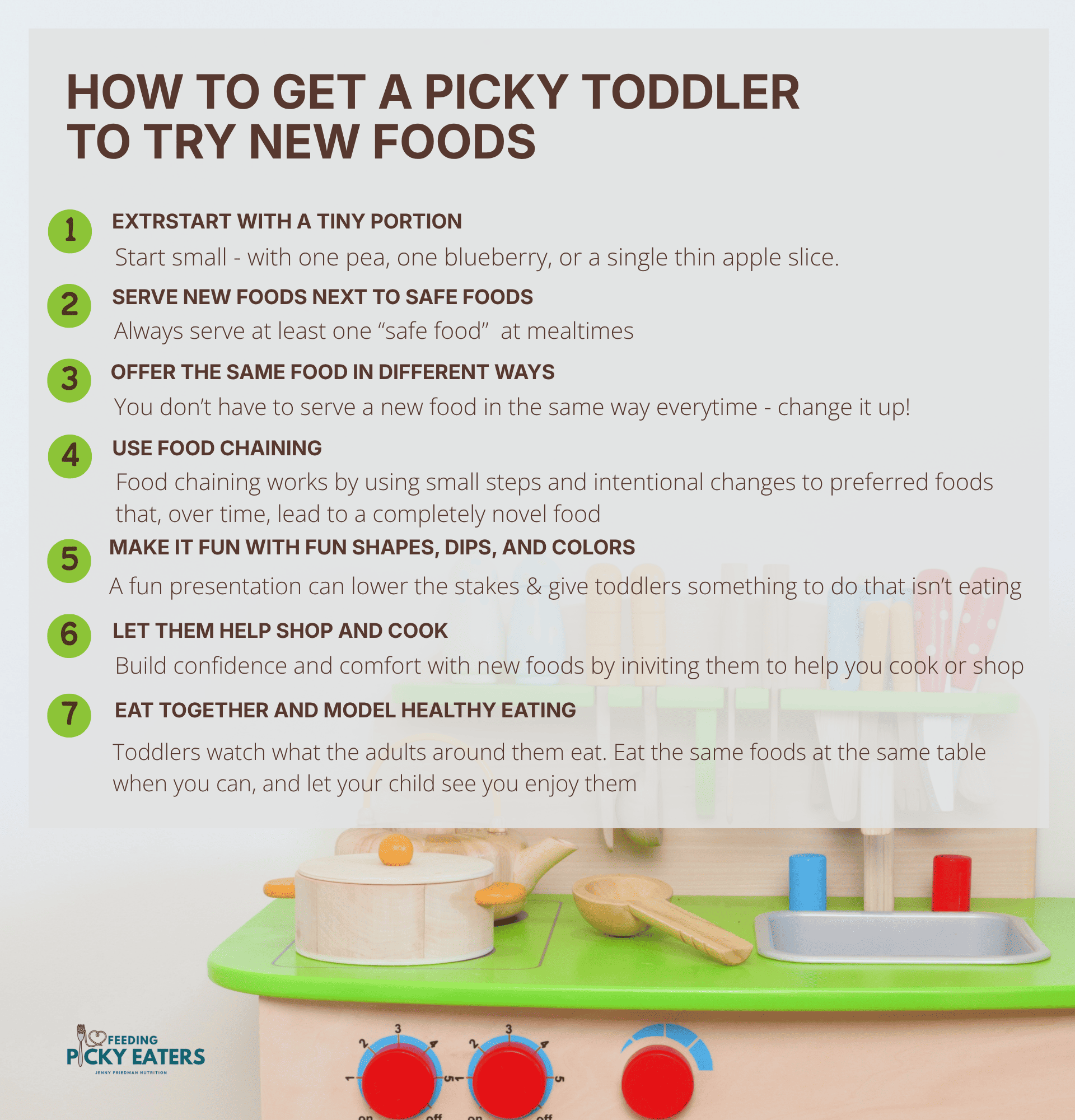
Start With a Tiny Portion
A full serving of a new food can feel overwhelming and like too much of a challenge. Start small – with one pea, one blueberry, or a single thin apple slice. A small amount is more approachable and easier to explore. You can always add more.
Serve New Foods Next to Safe Foods
A safe food is one your child reliably eats. Every plate should include at least one. Put a roasted sweet potato next to the nuggets your child loves, or a strawberry slice beside a favorite yogurt.
Offer the Same Food in Different Ways
A toddler who refuses a whole banana may accept freeze-dried banana, frozen banana slices, or banana in a smoothie. For young children, texture and presentation can change everything. Rotate preparations, even if it’s just how the food is cut, or try a new pairing, like serving the food with a dip.
For realistic ideas of what to serve, check this list of healthy food for picky eaters, which is built around what selective toddlers actually like.
Use Food Chaining
Food chaining means moving from a food your child already eats to a very similar one, then another, in small steps. One example chain: a favorite brand of chicken nugget, then a different brand, then homemade breaded chicken strips, then grilled chicken strips. Each step changes only one thing. This guide to food chaining for picky eaters has more examples.
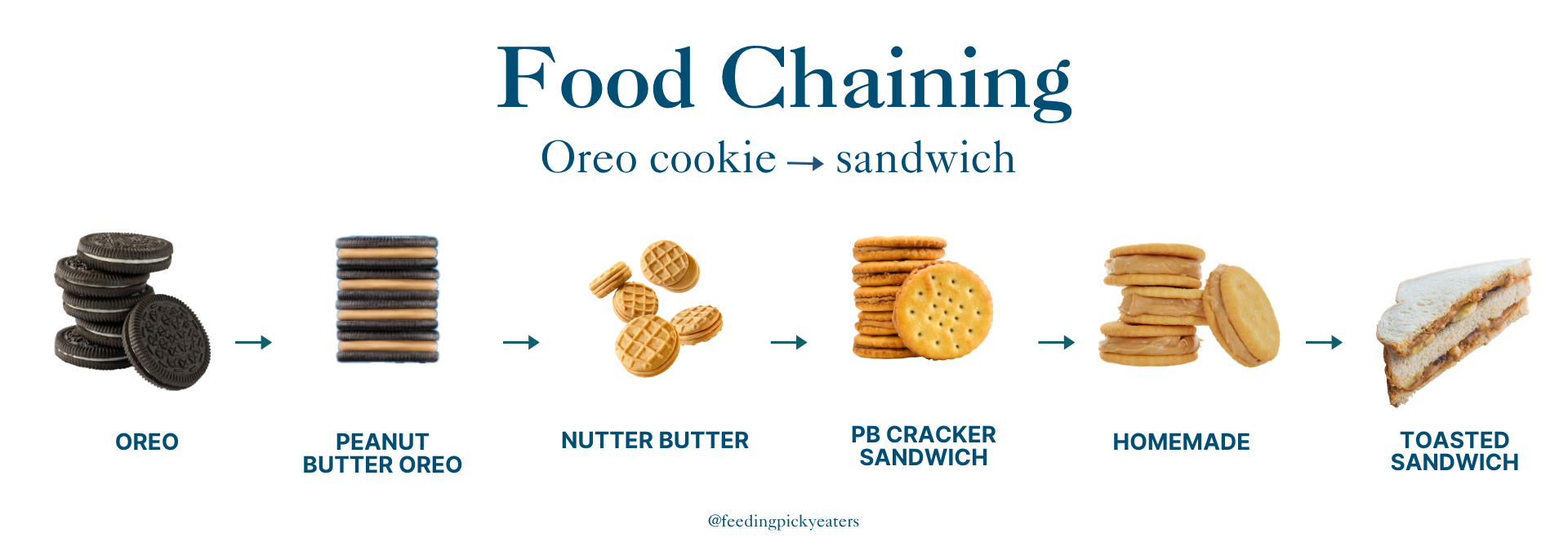
In my practice, food chaining tends to produce steady progress for toddlers with strong brand or texture preferences, because each food bridges to a familiar one and no single step feels like a big leap.
Make It Fun With Fun Shapes, Dips, and Colors
A fun presentation can lower the stakes and give toddlers something to do that isn’t eating. All interactions are exposures that can bring them closer to eating. Cut cucumbers into stars with a cookie cutter, serve melon cubes on a toothpick, or offer a small cup of ketchup or ranch for dipping. Sometimes the novelty is enough to inspire them to eat.
Let Them Help Shop and Cook
Toddlers can pick out a fruit at the store, rinse potatoes, or tear lettuce, which can help them feel confident and comfortable with foods without the pressure of the plate. Plus, young children are often more curious about food they helped choose or make.
Eat Together and Model Healthy Eating
Toddlers watch what the adults around them eat. Eat the same foods at the same table when you can, and let your child see you enjoy them. No narration is needed. Sharing a meal is how you model healthy eating.
Let Them Explore the Food Without Pressure to Eat It
Touching, smelling, licking, and even spitting out a food are all steps toward eating it. A toddler rolling a blueberry is one step to boosting the comfort and confidence they need to get closer to eating. Encourage your child to explore without any expectation of a bite.
What Should You Do If Your Toddler Keeps Rejecting New Foods?
Repeated refusal is part of the process. These are the steps I recommend when a new food keeps getting pushed away.
Keep Offering Without Pressure
Keep putting the food on the table in small amounts, without comment. Your child will never eat a new food if you stop offering it, so continue to serve it, even if your child doesn’t eat it at first.
Avoid Bribes, Rewards, or Making Them Clean Their Plates
“One more bite and you can have dessert” doesn’t teach a toddler to like the new food. Requiring kids to clean their plates can cause pushback and interfere with a child’s fullness cues. Both approaches tend to make refusal stronger, not weaker. Pressuring kids to eat in any form usually backfires. Neutral is the goal.
Don’t Cook a Separate Meal Every Night
Cooking a custom meal every night is exhausting and can teach your toddler that they don’t need or aren’t even expected to participate in the family meal. Instead, aim to serve a family meal with at least one of your child’s safe foods on the table. Your child can fill up on that if needed, while still sitting near new and nutritious foods.
Try a New Preparation or Pairing
If a food has been refused in one form, try a new one. Steamed broccoli might become roasted broccoli with parmesan. Cut a strawberry instead of serving if whole.
Stay Calm and Keep Mealtimes Positive
Mealtimes go better when conversation centers on the day, not on what’s being eaten. A calm table keeps a toddler regulated enough to explore. Stress at the table tends to show up as more refusal.
When a parent tells me nothing is working, I always look at how progress is being measured. Tolerating a new food on the plate, touching it, or licking it are real steps. Progress at this age might be measured in small interactions, not bites.
While new foods are still a work in progress, this guide on how to help a picky eater eat healthy covers ways to round out nutrition with the foods your child already accepts. The long-term goal is a child who eats a variety of healthy foods comfortably, not a perfect plate tonight.
Know When to Talk to Your Pediatrician
Picky eating is common in toddlers. Talk to your child’s pediatrician if you notice:
- Weight loss or poor growth, including dropping off their growth curve
- Gagging, choking, or vomiting with certain textures
- A very small number of accepted foods, often fewer than 20, especially if the list is shrinking
- Refusal of entire food groups, such as all fruits or all proteins
- Intense distress when new foods appear at the table
Your pediatrician may refer you to a feeding therapist or a pediatric dietitian. These can be signs of something beyond typical selectivity. This breakdown of ARFID vs picky eating explains the difference.
Support for Families of Picky Toddlers
Introducing new foods to a picky toddler takes patience, consistency, and a clear plan. If your child is between 2 and 7 and mealtimes have become a daily struggle, Eating with Ease is a step-by-step, no-pressure group program built for families of extreme picky eaters. Enrollment reopens in spring 2027. Join the waitlist to be first to know.


0 Comments