
For some kids, eating feels physically overwhelming. The textures or smells are just too much. For others, eating feels dangerous. And for some, food barely registers at all. They don’t get that hungry or forget to eat entirely.
Each of those experiences can be a symptom of Avoidant/Restrictive Food Intake Disorder (ARFID). ARFID changes a person’s relationship with food. Eating becomes difficult because of sensory sensitivities, fear of unpleasant experiences, or limited interest in food. The challenges go well beyond ordinary picky eating. ARFID can affect nutrition, growth, daily routines, and social situations like school lunch, birthday parties, and meals with friends.
As a registered dietitian specializing in extreme picky eating and ARFID, I work with children, teens, and families navigating every version of this condition. Understanding what causes ARFID is one of the most useful starting points. It explains why a child eats the way they do, and it shapes which kind of support will actually help.
If you’re new to the condition, start with what is ARFID for an overview. Recognizing the signs and symptoms of ARFID early makes it easier to find the right support.
What Causes ARFID
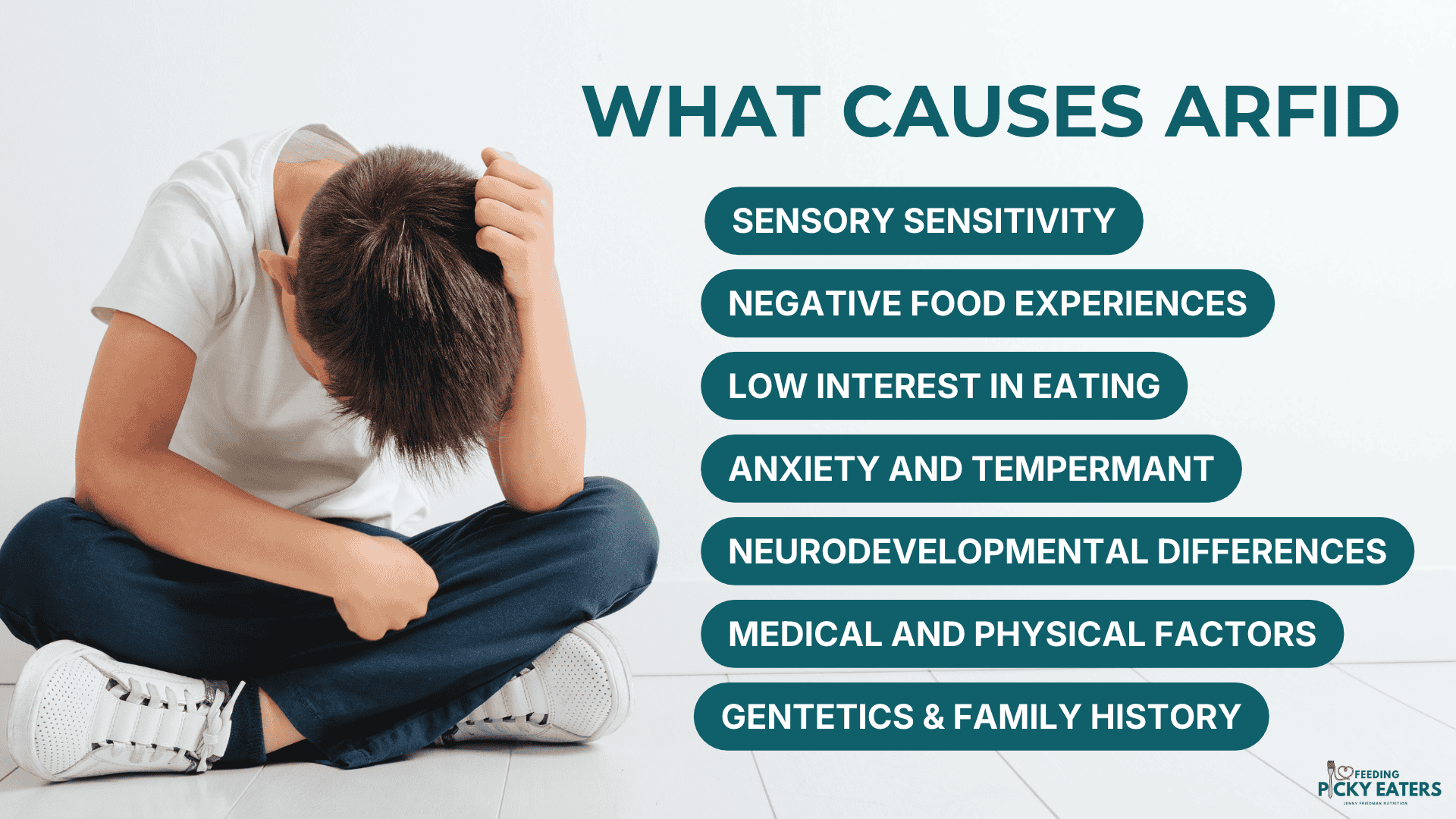
ARFID does not have one single cause. It usually develops through a combination of sensory sensitivities, negative experiences with food, low interest in eating, and anxiety-related factors. Which factors are involved, and how strongly, varies from person to person.
ARFID is also not simply a matter of being picky or choosing not to eat. A child with ARFID isn’t being stubborn. Their brain and body make certain foods feel intolerable, frightening, or not worth the effort. If you’ve been told it’s “just a phase,” this post on whether is ARFID real explains why it’s a recognized diagnosis.
Sensory Sensitivity
Many people with ARFID experience food more intensely than others. Texture, smell, taste, temperature, and appearance can all feel overwhelming. A slightly mushy texture or an unfamiliar smell can trigger gagging, distress, or complete avoidance. Sensory sensitivity is a frequent driver of ARFID, and it often shows up early in childhood as a short list of foods with very similar textures.
Negative Experiences With Food
A frightening choking episode, a bad bout of vomiting, painful reflux, or a medical procedure involving the mouth or throat can leave a lasting fear. After an experience like that, the nervous system can treat eating as a threat. Fear of choking or vomiting becomes the main reason a person avoids food, sometimes suddenly, even if they ate a wide variety of foods before.
Low Interest in Eating
Some people with ARFID simply aren’t very interested in food. They rarely feel hungry, forget to eat, or feel full after a few bites. Low interest in eating can look like a small appetite from the outside. Over time, it can lead to nutritional deficiencies, significant weight loss, or trouble growing as expected.
Anxiety and Temperament
ARFID frequently occurs alongside anxiety. A child with an anxiety disorder, or a naturally cautious temperament, may be more likely to avoid foods that feel uncertain. Food becomes one more place where worry shows up. Anxiety and avoidance can feed each other: the more a food is avoided, the scarier it can feel.
Neurodevelopmental Differences
ARFID is more common in autistic children and children with ADHD. Sensory differences are a core part of autism, and they overlap closely with food-related sensory sensitivities. In ADHD, distractibility and weaker hunger signals can make it easy to skip meals or lose interest partway through eating.
Medical and Physical Factors
Gastrointestinal conditions, reflux, food allergies, chronic illness, and oral motor challenges can all make eating uncomfortable. Even after a medical issue is treated, the avoidance it created can stay in place. This is one reason a medical evaluation is an important part of the picture.
Genetics and Family History
Research suggests a tendency toward anxiety and eating difficulties can run in families. That doesn’t mean ARFID is inherited directly. It means some children may be born more sensitive or cautious. For a deeper look, read is ARFID genetic.
ARFID is different from other eating disorders in one important way. Unlike an eating disorder such as anorexia nervosa or bulimia nervosa, ARFID is not driven by body image or a desire to change weight. A child with ARFID isn’t restricting to look a certain way. Learn more about the differences in ARFID vs anorexia.
Can Multiple Factors Contribute to ARFID at Once
Yes. Many people with ARFID have more than one contributing factor, and those factors often reinforce each other.
A child with sensory sensitivity might gag on a lumpy food. That gag is unpleasant, and sometimes frightening. Now the child has two reasons to avoid the food: the texture, and the fear of gagging again. If that child also has a small appetite, there’s little hunger pushing them to eat and especially to try anything outside their safe foods. Each factor makes the others stronger, and avoidance grows over time.
This overlap is why clinicians describe different types of ARFID: sensory-based, fear-based, and low-appetite. Many people show features of more than one type.

Each person’s experience is different. Understanding which factors are involved helps guide individualized treatment. A child whose ARFID is mostly sensory may benefit from gradual food exposure and occupational therapy. A child whose ARFID is mostly fear-based may need cognitive behavioral therapy to address the fear directly. Most children benefit from a team approach. See how to treat ARFID in children for what that looks like in practice.
Why ARFID Can Persist Into Adolescence and Adulthood
ARFID often begins in childhood, but it doesn’t always resolve on its own. For many people, it continues into the teen years and adulthood. These are some of the reasons why.
Established Food Avoidance Patterns
The longer a food is avoided, the more unfamiliar it becomes. Years of eating the same foods can make the list feel fixed. Avoidance that started as a response to one bad experience can become a habit that’s hard to break without support.
Sensory Sensitivities That Remain
Sensory sensitivity doesn’t automatically fade with age. A teen may still find certain textures or smells as overwhelming as they did at age five. What changes is often their ability to hide it.
Ongoing Fears Around Eating
Fear of choking or vomiting can stay active for years, especially when it hasn’t been addressed directly. Without help, a person may keep avoiding foods that feel risky, even when they know logically the food is safe.

Changing Social Expectations
As kids grow, more of their social life revolves around food. School lunches, sleepovers, team dinners, dates, and work events all involve eating in front of others. For a teen or adult with ARFID, these situations can bring embarrassment and stress, which can lead to skipping events entirely.
School, Work, and Independent Living
Moving away for college or living alone means planning, shopping for, and preparing meals. Without a parent managing food, a person with ARFID may lean even harder on a small number of safe foods. Busy schedules can also make low interest in eating more noticeable, since meals get skipped more easily.
Nutritional Concerns and Anxiety
A limited diet can lead to nutritional deficiencies that affect energy, mood, and focus. Low energy and ongoing anxiety about unfamiliar foods can reinforce restrictive eating, making it even harder to try something new. ARFID can also take a toll on mental health, contributing to isolation, low self-esteem, or depression.
ARFID that continues into adolescence and adulthood is still treatable. With appropriate professional support, people can build coping skills, reduce fear around food, and work toward a more flexible relationship with eating. For older kids and teens, this guide to teen ARFID treatment covers what support can look like.
When to Talk to a Professional
There is no single symptom of ARFID that confirms it. If your child’s eating is affecting their growth, nutrition, energy, or daily life, talk to your child’s doctor. A pediatrician can check for medical causes and nutritional deficiencies. They can also refer you to specialists in avoidant restrictive food intake disorder, such as a pediatric dietitian, an occupational therapist, or a mental health provider experienced in eating disorders.
Avoidant Restrictive Food Intake Disorder is a recognized condition, not a choice. Understanding the cause is the first step toward the right support.
Where to Start
If you’re trying to make sense of your child’s eating, the free 3 Steps to Eating guide is a practical place to begin. It walks through the foundational, low-pressure framework I use with picky eaters and children with ARFID, whatever factors are behind the avoidance.
Download the free 3 Steps to Eating guide


0 Comments