Jenny Friedman Nutrition | ARFID dietitian
  • About Jenny
  • My Book
  • Work With Me
    • My Program
    • Food Play Plan
    • Coaching
  • Resources
  • Testimonials
  • Blog
Select Page

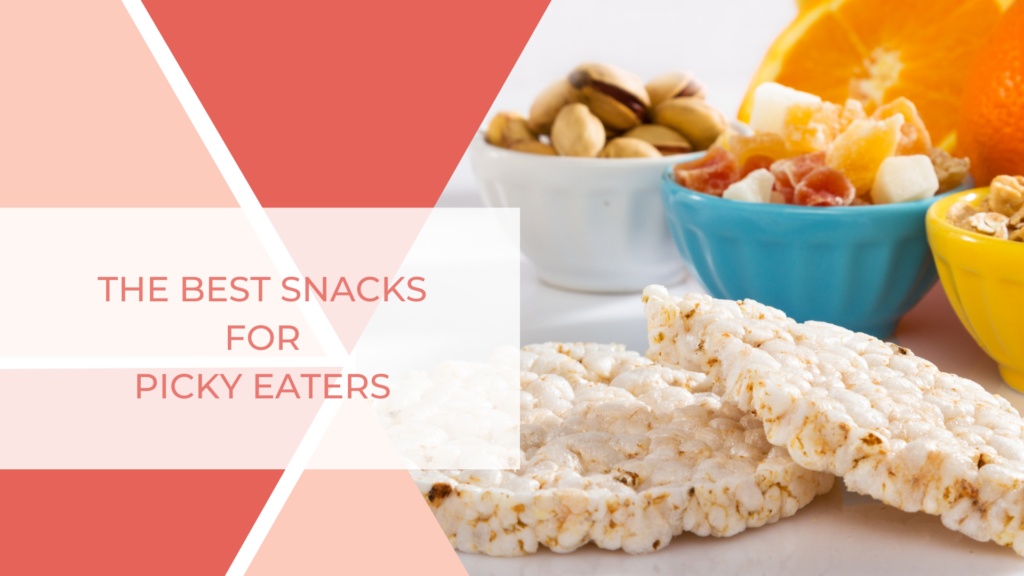
The Best Snacks For Picky Eaters

by Jenny Friedman, RD | Oct 25, 2022

Whether your child is the pickiest kid on the block or they’d eat just about anything, figuring out what to actually feed them between meals is a daily problem with no permanent solution.

As a registered dietitian specializing in extreme picky eating and ARFID, I build snack lists with families constantly, and the ones that work are never the aspirational kind. They’re short, specific, and made up of foods the child already eats.

This master list includes hefty options and lighter ones, fresh and store-bought. Use it as a starting point, then build your own version around your child’s preferences.

The Best Snacks for Picky Eaters

Two Kinds of Snacks

Every snack is filling a purpose, and naming that purpose first makes the choice easier. There are two broad categories:

Fun snacks exist mainly for enjoyment. Functional snacks meet a nutritional need – real hunger, or a gap in the day.

Three questions sort one from the other:

  • When is the next meal?
  • When was the last meal?
  • How hungry is my child?

A snack twenty minutes before dinner can be light. A snack carrying a child from noon to six needs protein, a carb, and some fat.

Fun Snacks

  • Fresh fruit — Familiar, sweet, and low-stakes. Serve it the same way each time; consistency matters more than variety here.
  • Cookies — A snack that’s purely for pleasure is a legitimate part of a child’s week. Pair it with milk if you want a little staying power.
  • Graham crackers — Mildly sweet and predictable in texture, which makes them an easy default.
  • Snap pea crisps — Crunchy and salty like a chip, with a vegetable underneath. A useful bridge for kids who won’t touch a fresh pea.
  • Cucumber slices — One of the more accepted vegetables among picky eaters because they’re crisp and mild. Peel them if the skin is the problem.
  • Bell peppers with a dip — Sweeter than most vegetables and very crunchy. Serve with ranch, hummus, or whatever dip your child already likes.
  • Pretzels — Predictable, portable, and good for kids who seek out crunch.
  • Chips — Same appeal as pretzels. Serving them on a plate instead of from the bag makes the portion visible.
  • Dried fruit — Chewy and concentrated in sweetness. Better tolerated than fresh fruit by some kids.
  • Applesauce — Smooth, no chewing required, and easy to accept on a rough day.
  • Pouches — Convenient and reliably the same every time, which is exactly the appeal for a selective eater.
  • Ice cream — Cold and smooth. Worth keeping neutral rather than treating it as a reward.
  • Muffins — Soft and familiar. A good vehicle for a bit more nutrition if your child accepts a boosted version.
  • Crackers — Endlessly variable in shape and size, which lets you make small changes to a food that’s already safe.
  • Smoothie melts — Freeze-dried and crunchy, dissolving quickly in the mouth, which suits kids who are cautious about texture.

Functional Snacks

  • Ants on a log — Celery, peanut butter, and raisins. If celery is a nonstarter, run the same combination on a cracker or a pretzel rod.
  • Half sandwich — Half the size, half the pressure. Cut it the way your child prefers and don’t change it.
  • Milk with fruit — Milk brings protein and fat; the fruit brings the interest. A reliable pairing when a real snack won’t happen.
  • Milk with a bar or energy ball — Adds staying power to a snack that’s otherwise mostly carbohydrate.
  • Cheese, with or without fruit and crackers — Consistently one of the easiest proteins for picky eaters to accept.
  • Rice cake with nut butter or cheese — Neutral base, and it takes on whatever topping is already accepted.
  • Yogurt — Protein and calcium in a smooth format. Plain with a drizzle of honey works if flavored versions are too sweet.
  • Milkshake — Genuinely useful for children who are underweight or eating very little.
  • Smoothie — A place to add a small amount of something new alongside familiar flavors, visibly rather than hidden.
  • Snack bar — Look for whole ingredients and a short list. Chewy and crunchy versions both exist, so match the texture your child likes.
  • Muffin with nut butter or cheese — Turns a fun snack into a functional one with almost no extra effort.
  • Nuts — For older kids who chew well. Nut butters are safer for younger children.
  • Deli meat — Roll-ups are easy to eat, need no utensils, and travel well.
  • Edamame — Poppable, mild, and a whole-food protein.
  • Roasted sweet potatoes — Sweet, soft, and a strong option for kids who reject most vegetables. Roast into fry shapes if familiarity helps.
  • Cereal — Dry, by the handful, with milk on the side. Choose one with less added sugar.
  • Hummus with whole grain crackers or bread — Smooth, mild, and pairs with a lot of accepted dippers.

Snacks for Picky Eaters by Texture

Most selective eaters have a texture they trust. Starting from that texture, rather than from a food group, is the shortest route to a new food.

  • Crunchy: pretzels, whole grain crackers, snap pea crisps, cucumber slices, bell peppers, dry cereal, freeze-dried fruit
  • Smooth: yogurt, applesauce, pouches, smoothies, hummus, peanut butter, milkshakes
  • Chewy: dried fruit, snack bars, deli meat, bagels, energy balls
  • Melty: cheese, ice cream, smoothie melts, melted cheese on a cracker

To use texture as a bridge, keep the texture constant and change one other thing. A child who eats crunchy pretzels may accept crunchy whole grain crackers, then crunchy snap pea crisps. Each move is small enough to feel safe, and it’s how food lists grow over time.

How to Plan Healthy Snacks for Kids

It’s helpful to think of a snack as a mini meal: relatively balanced, with at least one filling item — a protein, a high-fiber food, or a source of healthy fats. This matters most for younger children, who have less room in their stomachs and fewer calories to spare on low-nutrition foods.

Beyond that, three planning habits do most of the work:

  • Keep snack time on a schedule. Grazing suppresses appetite at meals and makes eating harder to read.
  • Write the list down. A short list on the fridge means you’re assembling instead of deciding at 3 p.m.
  • Serve one new thing alongside two safe ones. No pressure to eat it, and no commentary either way.

Why Picky Eating Happens

Picky eating isn’t a discipline problem, and it’s rarely about the food itself.

Some of it is developmental. Wariness about unfamiliar food peaks between ages two and six in most children, and eating habits in that window are supposed to be inconsistent. It eases with repeated, unpressured exposure.

Some of it is sensory. Texture, smell, temperature, and appearance land more intensely for some kids, and a food that seems mild to an adult can be genuinely overwhelming. Gagging in that situation is a physical response, not a performance.

And some of it is emotional. Eating is one of the few areas where a young child holds real control, and mealtimes that have become tense tend to stay tense. Asking a child to eat food they’ve never seen before, in the middle of a meal that already feels high-stakes, rarely goes well.

That’s why snacks are useful. They’re lower-pressure than dinner, which makes them a better place to introduce something new.

When Picky Eating Needs More Support

Typical picky eating narrows and then widens again. When it only narrows, it’s worth a closer look. Signs that go beyond the usual:

  • Fewer than about 20 accepted foods, and the list is shrinking
  • Refusing entire food groups or textures rather than individual foods
  • Gagging, vomiting, or real distress when a new food appears
  • Weight loss, stalled growth, or nutrient gaps on lab work
  • Skipping birthday parties, school lunch, or playdates because of food

If several of these sound familiar, structured support will move faster than trial and error. Eating with Ease is built for families of children ages 2–7 navigating extreme picky eating and ARFID, using a step-by-step, no-pressure approach to expanding what a child eats.

Learn more about Eating with Ease

More snack ideas:

  • Healthy sensory-friendly snacks
  • Crunchy packaged snacks for picky eaters
  • Easy-to-pack travel snacks
  • Healthy snacks for kids with sensory preferences
  • A dietitian’s favorite snack bars for picky eaters
  • Handling bedtime snacks

What Are Your Go-To Snack Ideas for Picky Eaters?

Every family lands on a rotation that works for reasons no list could predict. If you’ve found something that gets kids to eat when nothing else will, leave it in the comments — the specific, unglamorous ones are usually the most useful.


0 Comments

Follow me on Instagram

New on the blog:

What Is Food Therapy For Kids

Related Posts

  • 13 Nutritious Nut-Free Bars for School Lunches
  • A Dietitian’s Favorite Snack Bars for Picky Eaters
  • How To Sneak Protein Into Meals For Kids
  • Fruits and Vegetables for Picky Eaters: Easy Ideas for Kids with Texture Aversions
  • How to Get Your Kid to Like Pizza – Easy Tips for Picky Eaters
  • Privacy Policy
  • Affiliate Policy
  • HIPAA Privacy Practices

© 2026 Jenny Friedman Nutrition

  • Follow
  • Follow
  • Follow

Contact

We use cookies on our website to give you the most relevant experience by remembering your preferences and repeat visits. By clicking “Accept”, you consent to the use of ALL the cookies.
Cookie settingsACCEPT
Manage consent

Privacy Overview

This website uses cookies to improve your experience while you navigate through the website. Out of these, the cookies that are categorized as necessary are stored on your browser as they are essential for the working of basic functionalities of the website. We also use third-party cookies that help us analyze and understand how you use this website. These cookies will be stored in your browser only with your consent. You also have the option to opt-out of these cookies. But opting out of some of these cookies may affect your browsing experience.
Necessary
Always Enabled
Necessary cookies are absolutely essential for the website to function properly. This category only includes cookies that ensures basic functionalities and security features of the website. These cookies do not store any personal information.
Non-necessary
Any cookies that may not be particularly necessary for the website to function and is used specifically to collect user personal data via analytics, ads, other embedded contents are termed as non-necessary cookies. It is mandatory to procure user consent prior to running these cookies on your website.
SAVE & ACCEPT