Jenny Friedman Nutrition | ARFID dietitian
  • About Jenny
  • My Book
  • Work With Me
    • My Program
    • Food Play Plan
    • Coaching
  • Resources
  • Testimonials
  • Blog
Select Page

A Dietitian’s Favorite Snack Bars for Picky Eaters

by Jenny Friedman, RD | Jan 3, 2022

Finding a snack bar your picky eater will actually eat is harder than you’d guess. One brand is too chewy. Another has visible seeds. The one your child ate all last spring is suddenly rejected because the wrapper changed.

Families in my practice ask about bars constantly, and for good reason: for a child eating from a short, fixed list of foods, an easy-to-eat on the go option is worth a lot. I’m Jenny Friedman, MS RD, a registered dietitian specializing in extreme picky eating and Avoidant Restrictive Food Intake Disorder (ARFID), and I know that when you’re looking for a food your child will actually eat, nutrition isn’t the only consideration. 

That’s why this list is organized by bar type — fruit, granola, chia, chewy, and higher-protein — so you can scan for the texture or variety your child already accepts rather than guessing in the grocery aisle.

A Dietitian’s Favorite Snack Bars for Picky Eaters

As a dietitian who works with selective eaters and kids with ARFID, I judge a bar on three things: texture, ingredients, and nutrition (whether or not it’s essentially a candy bar disguised in a wholesome wrapper).

Texture is my first consideration for extremely picky eaters because most have strong reactions to textures. A bar with an excellent nutrition label is worth nothing if it’s gritty, sticky, or full of unexpected chunks. Sensory-driven selective eating means a bar has to be consistent bite to bite, and bars vary widely on that. That’s why the list below groups products by texture family.

This post may contain affiliate links. If you shop from one of our links, we may earn a commission.

How to Choose the Best Snack Bars for Picky Eaters

Three things to check on the label before you buy:

  1. Look at the ingredients, especially the first three. Sugar, or anything that functions as sugar, in the top three ingredients tells you what the bar mostly is. Look instead for whole grains, dried fruit, nuts, or seeds leading the list. This is harder than it sounds.
  2. Look for a minimal amount of added sugar. Aim for less than 5 grams of added sugar where you can.
  3. Look at protein, fat, and fiber. These are what keep a child full between meals. A bar with none of the three is a sweet snack, not a snack that holds anyone over.

Best Protein Bars for Kids

Protein is the piece most kids’ bars skip. If your child’s accepted foods are heavy on crackers, pasta, and fruit, a higher-protein bar can be a practical way to add some in without a fight at the table.

A note on portioning before the list: adult protein bars often carry 14 grams of protein or more in a single bar, which is far more than a young child needs from one snack. Aim for roughly 5 to 7 grams for a preschooler or young school-age child. 

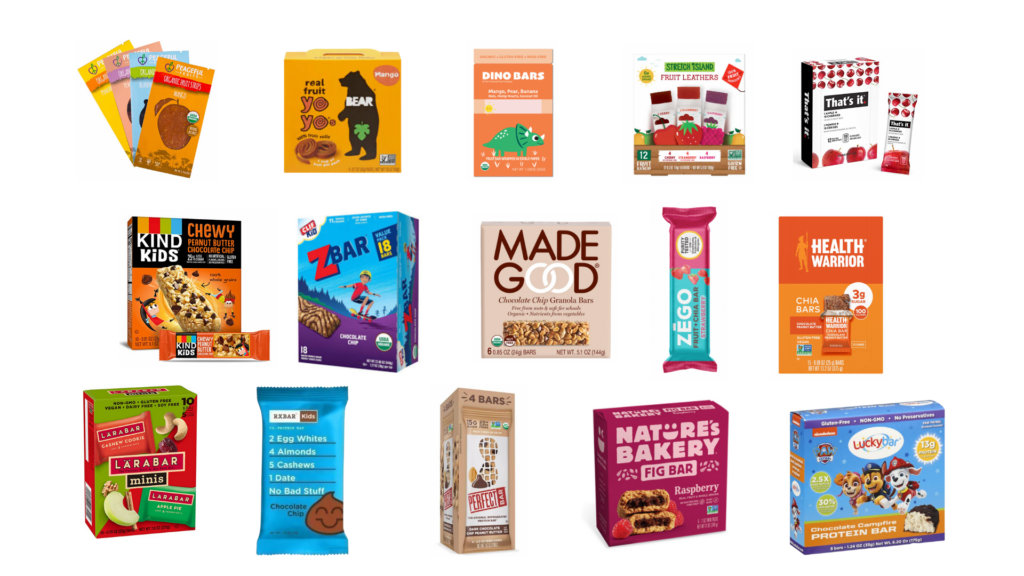
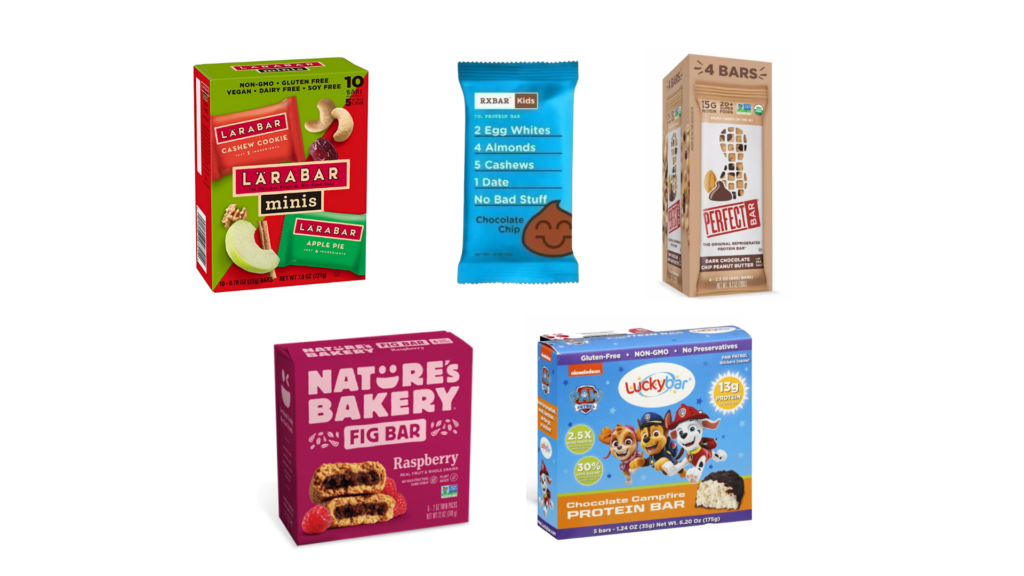
Perfect Bar Mini — 7 grams of protein. Soft, chewy, and about a third the size of the adult bar. The protein comes largely from ground peanut butter, milk, and egg, plus a blend of dried fruit and vegetable powders. These need to stay refrigerated.

RX Kids Bars — 5 grams of protein, no added sugar. Dates, egg whites, and nuts, with a short ingredient list printed right on the front. Sweetness comes entirely from the fruit. The chew is dense and sticky, which is a dealbreaker for some sensory-sensitive kids and exactly right for others.

Clif Kid Zbar Protein — 5 grams of protein. Same familiar Zbar shape and flavor lineup as the original, built on organic rolled oats but reformulated with added protein. A good bridge if your child already accepts the standard Zbar.

Kids protein bars are useful, but they’re a supplement to a child’s diet, not the strategy. If protein is a persistent gap, that’s a conversation worth having with your child’s doctor or dietitian.

Fruit Bars

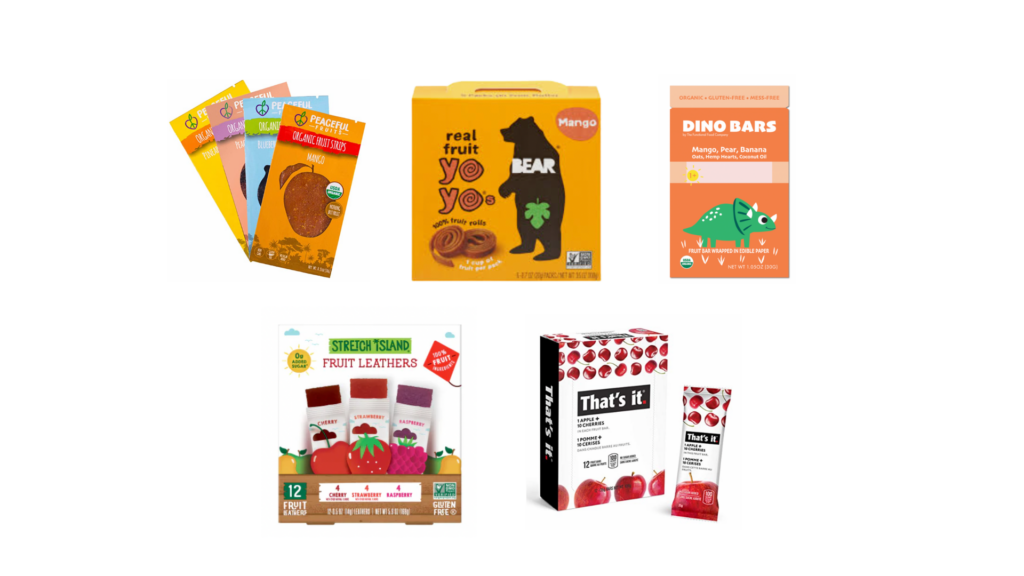
Fruit leather: Peaceful Fruits, Bear Fruit Rolls, and Stretch Island Fruit Leather are all made primarily from fruit, with no added sugar in most varieties. Stickiness and chew vary a lot between brands, so expect some trial and error before you find one that works.

That’s It Bars contain fruit and nothing else, usually two ingredients, no added sugar, and about 3 grams of fiber. Soft and not especially chewy, which makes them a reasonable option for younger toddlers.

Dino Bars are a longtime favorite of mine: fruit, gluten-free oats, and hemp hearts, with no added sugar and around 2 grams each of protein and fiber. They’re free of the top nine allergens, and the edible paper wrapper means no sticky fingers. 

Granola Bars

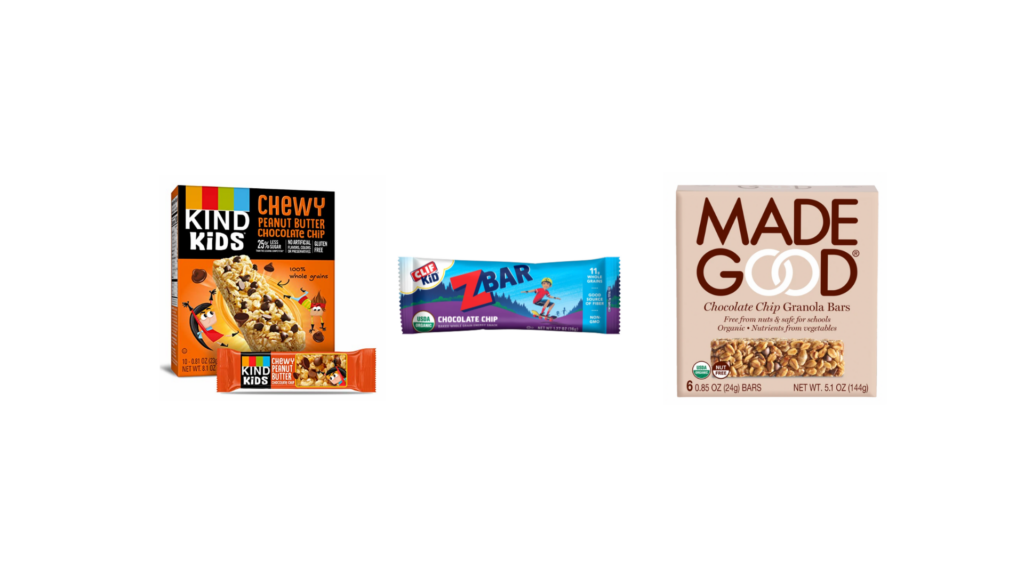
KIND Kids Granola Chewy Bars come in Honey Oat, Chocolate Chip, and Peanut Butter Chocolate Chip, with 5 grams of protein and less added sugar than most bars in the same aisle. Chewy, but not so chewy that they’re hard work.

Clif Kid Zbars are built on organic whole grains, with flavors like cinnamon roll and chocolate brownie that reliably appeal to selective eaters. The tradeoff: the original Zbar runs around 9 grams of added sugar and only about 2 grams of protein. The texture is soft and chewy rather than crunchy.

MadeGood Granola Bars are chewy, allergen-friendly, and made in a facility free of the top allergens, with about 2 grams of fiber and added vegetable extracts that don’t taste like vegetables. Sugar sits high on the ingredient list, so these land in the once-in-a-while category.

Chia Bars

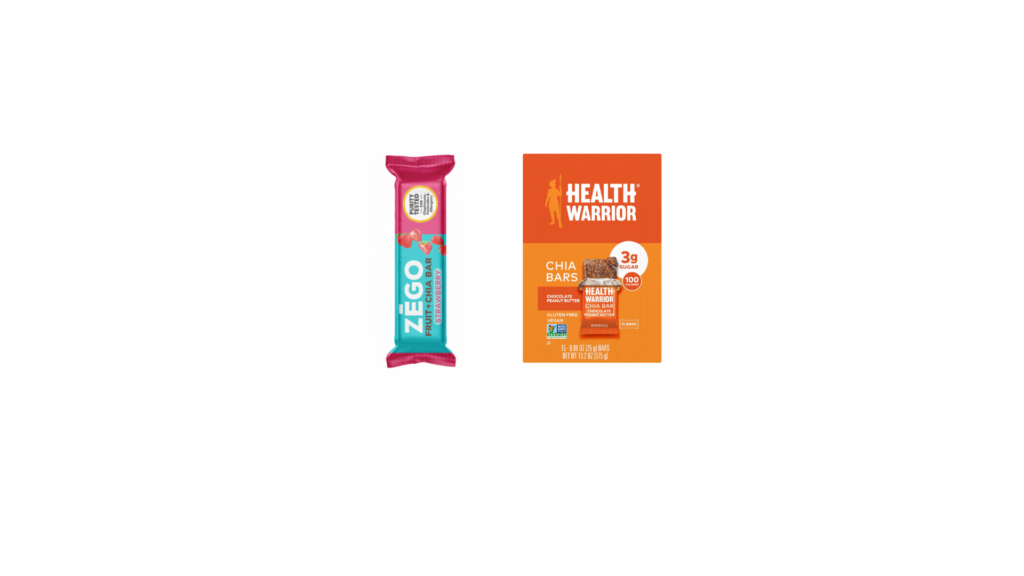
ZEGO Fruit + Chia Bars are made from fruit purée and organic chia seeds, with no added sugar. Chia contributes fiber, a little protein, and omega-3 fats, one of the healthy fats kids often miss when their diets are narrow. The seeds add a fine grit that some children love and others notice immediately.

Health Warrior Chia Bars are low in added sugar, which makes them a workable option for more regular snacking. Flavors range from fruit-forward to coconut, chocolate peanut butter, caramel sea salt, and mango.

Chewy Bars

Mini Larabars are half the size of the standard bar, sized well for small hands. Dates, nuts, and usually nothing else, with no added sugar. Dense but not tough.

Nature’s Bakery Fig Bars are made with whole wheat flour and are more substantial than a Fig Newton. Added sugar and brown rice syrup push these higher on sugar, so half a pack paired with milk or cheese for protein is a better fit than a full pack on its own.

Perfect Bar Kids and RX Kids Bars, from the protein section, also fit into this texture category as both are soft-chewy. 

Homemade Snack Bars for Picky Eaters

Some parents would rather control the ingredients entirely, and for a child with a very specific texture preference, homemade lets you adjust the chew until it’s right. This one requires no baking and no special equipment.

No-Bake Oat and Nut or Seed Butter Bars

  • 2 cups rolled oats
  • 1 cup nut or seed butter
  • 1/3 cup maple syrup
  • Pinch of salt
  • Optional: 1/4 cup mini chocolate chips

Line an 8×8 pan with parchment paper. Warm the seed butter and maple syrup together for about 30 seconds until they stir easily, then mix in the oats and salt until everything is coated. Press the mixture firmly and evenly into the pan (make sure it’s firm or the bars will crumble). Chill for at least an hour, then lift the parchment paper out and cut into bars. Store in the refrigerator for up to a week.

Using seed butter instead of a nut butter keeps these safe for allergies and school restrictions. For a smoother texture, pulse the oats a few times in a food processor first.

What to Look for in a Kids’ Snack Bar

Labels on bars for kids are designed to be reassuring, but they can also be confusing. Here’s what actually matters.

Protein. Five to seven grams is a solid target for a snack for kids in the preschool and early elementary range. Protein from recognizable sources (such as nut or seed butter, milk, eggs, oats) means that the bar also offers other nutrients. Protein isolates and added protein crisps deliver the number without much else.

Added sugar. Total sugar on a label includes the naturally occurring sugar in fruit and milk, which isn’t a concern. Added sugar is the line to pay attention to. Under 5 grams is a good benchmark.

Healthy fats. Fat slows digestion and helps a snack last until the next meal, and it’s frequently missing from bars marketed to children. Nuts, seeds, nut butters, and chia are valuable sources. A bar with 3 to 6 grams of fat from whole-food sources will hold a child better than a fat-free bar with the same calories.

Ingredient lists. Shorter is generally better, but the more useful test is whether you can identify what the first five ingredients are. Syrups appearing two or three times under different names, like tapioca syrup, cane syrup, brown rice syrup, is a sign the bar may be candy in disguise.

Texture consistency. Not on any label, but the one that determines whether the bar gets eaten. For a child with sensory-driven food avoidance, a bar that varies from batch to batch will get dropped from the list of safe foods after one bad experience.

Frequently Asked Questions

Can a snack bar be a meal replacement?

For children, ideally no. A bar can bridge a gap on a long car ride or a rushed morning and it can supplement a meal, but it isn’t a meal replacement because most kids’ bars fall well short of a meal in calories, protein, and variety. Bars marketed to adults as meal replacements are formulated for adult needs and aren’t appropriate substitutes for a child’s meal. If your child is regularly skipping meals and filling in with bars, that pattern is worth raising with their pediatrician.

Which snack bars are best for toddlers?

Soft, fruit-based bars with no added sugar and no whole nuts: That’s It Bars, Dino Bars, and ZEGO chia bars all fit. Skip dense, chewy bars like RX and Larabar for the youngest kids, since the chew can be difficult to manage. Always serve bars seated and supervised. If your toddler won’t eat much beyond a handful of foods, a bar can be a low-stress way to offer something new alongside a familiar item.

Which snack bars are nut-free for school?

MadeGood, Dino Bars, That’s It Bars, and most fruit leathers are nut-free, and MadeGood and Dino Bars are made free of the top allergens. Always check the current package, since formulations and facilities change. I’ve put together a full post on nut-free bars for school lunches with more options and detail on allergen labeling.

How often should kids eat snack bars?

There’s no fixed number. A bar is one snack option among many, and for a child with a narrow list of accepted foods, a reliable bar can be genuinely valuable. It works best alongside foods that require actual chewing and offer different textures. I’ve written a full post on the best snacks for picky eaters covering options beyond the bar aisle.

If your child’s list of accepted foods is short and getting shorter, bars are a stopgap rather than a solution. The free 3 Steps to Eating guide walks through the framework I use with extreme picky eaters and children with ARFID to start expanding what a child will eat.

Download the free guide

What Snack Bars Do Your Kids Love?

Every picky eater has a different set of non-negotiables, and parents find bars I haven’t tried yet all the time. If your child has a bar they reliably accept, leave a comment below. It can help other parents find something that works for their child.


3 Comments

  1. Julia
    Julia on January 4, 2022 at 10:42 pm

    Do you have any suggestions for a picky eater snack for a child with a severe peanut allergy?

  2. Barbara Coven-Ellis
    Barbara Coven-Ellis on January 6, 2022 at 2:53 pm

    Thank you thank you THANK YOU! I don’t have the time, budget, nor energy to try everything I see on the shelves. This gives me much needed direction.

  3. Jp
    Jp on February 1, 2022 at 3:52 pm

    Thanks for the suggestions ! So far we have tried the Made good and the That’s it bar (apple and blueberry). Both pretty sweet “that’s it” bar has way to much sugar in it. LO was able to take a couple nibbles, but I couldn’t even finish it.

Follow me on Instagram

New on the blog:

What Is Food Therapy For Kids

Related Posts

  • 13 Nutritious Nut-Free Bars for School Lunches
  • The Best Snacks For Picky Eaters
  • How To Sneak Protein Into Meals For Kids
  • Fruits and Vegetables for Picky Eaters: Easy Ideas for Kids with Texture Aversions
  • How to Get Your Kid to Like Pizza – Easy Tips for Picky Eaters
  • Privacy Policy
  • Affiliate Policy
  • HIPAA Privacy Practices

© 2026 Jenny Friedman Nutrition

  • Follow
  • Follow
  • Follow

Contact

We use cookies on our website to give you the most relevant experience by remembering your preferences and repeat visits. By clicking “Accept”, you consent to the use of ALL the cookies.
Cookie settingsACCEPT
Manage consent

Privacy Overview

This website uses cookies to improve your experience while you navigate through the website. Out of these, the cookies that are categorized as necessary are stored on your browser as they are essential for the working of basic functionalities of the website. We also use third-party cookies that help us analyze and understand how you use this website. These cookies will be stored in your browser only with your consent. You also have the option to opt-out of these cookies. But opting out of some of these cookies may affect your browsing experience.
Necessary
Always Enabled
Necessary cookies are absolutely essential for the website to function properly. This category only includes cookies that ensures basic functionalities and security features of the website. These cookies do not store any personal information.
Non-necessary
Any cookies that may not be particularly necessary for the website to function and is used specifically to collect user personal data via analytics, ads, other embedded contents are termed as non-necessary cookies. It is mandatory to procure user consent prior to running these cookies on your website.
SAVE & ACCEPT