
An online ARFID test can’t diagnose ARFID. What it can do is help you decide whether a conversation with a qualified professional is worth having.

That conversation often starts with a pattern that has been building for a while. A short list of accepted foods that never seems to grow. Strong reactions to textures or smells. Fear of choking or vomiting that makes every meal feel risky. Over time, those experiences can shape daily routines, social plans, and a person’s whole relationship with food.
As a registered dietitian specializing in extreme picky eating and ARFID, I work with children, teens, and families who are trying to figure out whether their eating habits point to something more than picky eating. This post explains what an ARFID test measures, the signs worth knowing, who might benefit from screening, and how ARFID is actually diagnosed.
If you’re new to the condition, start with what is ARFID for a full overview.

What Is an ARFID Test
An ARFID test, sometimes called an ARFID quiz or screening tool, is a short questionnaire about eating habits. It asks about the experiences most closely linked to Avoidant/Restrictive Food Intake Disorder (ARFID): how many foods a person eats, how they react to certain textures and smells, how much interest they have in eating, and whether fear plays a role.
One of the most widely studied tools is the Nine Item Avoidant/Restrictive Food Intake Disorder Screen (NIAS). It asks nine questions grouped into three areas that match the main ARFID patterns: picky eating, low appetite, and fear around eating. Researchers use it to estimate how likely ARFID is in a group of people. Clinicians sometimes use it as a starting point.
A high score on an Avoidant Restrictive Food Intake Disorder screen can suggest that someone’s eating fits patterns seen in ARFID. A low score can be reassuring. Neither result is a diagnosis.
A screening tool can’t weigh growth, lab results, medical history, or the many other reasons a person might restrict food. It also can’t tell ARFID apart from another eating disorder or a medical condition. That takes a professional assessment.
What Signs of ARFID to Recognize
No single sign confirms ARFID. These are the areas an ARFID test usually asks about, and the ones a clinician will look at more closely.
A Limited Variety of Foods
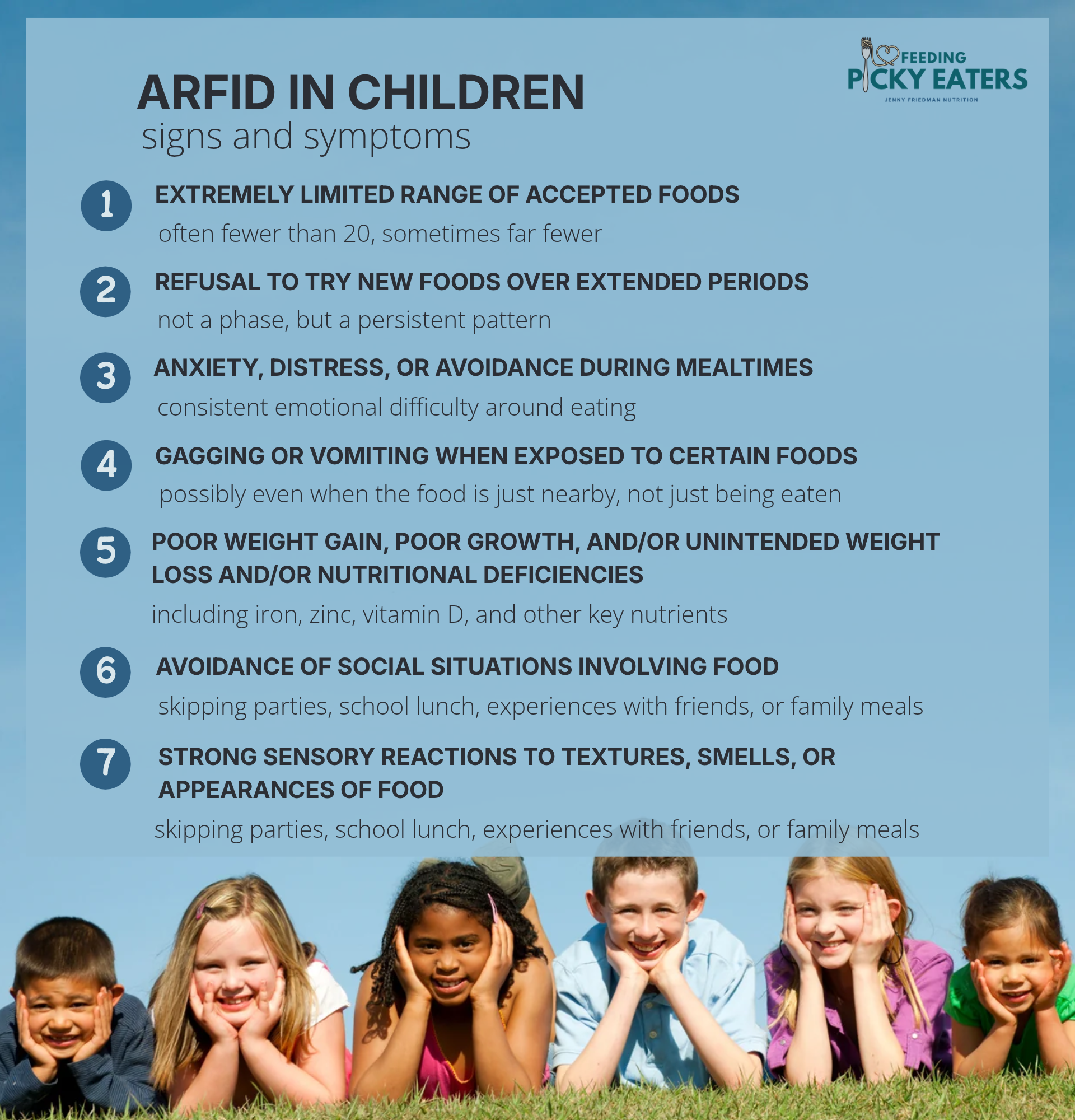
Many kids go through picky eating phases, and their food list usually grows again with time. With ARFID, the list often stays small or gets smaller. Some people eat fewer than 20 foods. Some refuse entire food groups or textures. A narrow variety of foods that hasn’t expanded over years is one of the clearer signs of ARFID.
Sensory Sensitivities
Some people experience the texture, smell, taste, temperature, or look of food far more intensely than others. A mushy bite or an unexpected smell can trigger gagging or distress. This is different from disliking a food. For someone with strong sensory sensitivities, certain foods feel genuinely overwhelming.
Fear of Choking or Vomiting
For some people, restrictive eating is driven by fear. A past choking episode, a stomach illness, or a painful reflux experience can teach the body that eating is dangerous. Fear-driven avoidance can start suddenly, even in someone who ate a wide range of foods before.
Nutritional Impacts
Restrictive eating can lead to weight loss, slowed growth in children, low energy, or nutritional deficiencies such as low iron, zinc, or vitamin D. Some people with ARFID rely on nutrition supplements to meet their needs. Weight alone doesn’t tell the whole story. A person can be at an average weight and still be missing key nutrients.
Social Impacts
ARFID often shows up outside the kitchen. A child may avoid birthday parties. A teen may skip school lunch or make excuses not to eat with friends. An adult may turn down work dinners or travel. When food limits daily life and relationships, it can also take a toll on mental health.
Ordinary picky eating may involve some of these signs in a mild form. ARFID is more persistent, more restrictive, and more likely to affect health or daily functioning. For a closer look at how this shows up in children, see these signs of ARFID in kids, or compare the two in ARFID vs. picky eating.
Who Might Benefit From an ARFID Screening
Screening can help identify concerns worth discussing with a qualified professional. It cannot confirm or rule out ARFID.
Children and Teenagers With Persistent Food Restriction
A child whose food list has stayed small for years, or keeps shrinking, may benefit from screening. The same goes for a teen whose eating has started to limit friendships, sports, or school. Parents often complete screening questions on a younger child’s behalf.
Adults With Longstanding Food Avoidance
ARFID isn’t only a childhood condition. Many adults have avoided certain foods for as long as they can remember and were told it was just picky eating. A screening can help put words to a lifelong pattern and open the door to support.
People Whose Eating Interferes With Nutrition or Daily Life
Anyone whose eating is affecting their weight, energy, nutrition, or ability to participate in daily activities is a good candidate for screening. In this case, a screening shouldn’t replace a doctor’s visit. It can be a useful way to organize what to share at one.
How Is ARFID Diagnosed
ARFID is diagnosed through a professional assessment, not an online quiz. Among feeding and eating disorders, ARFID has its own diagnostic criteria in the DSM-5-TR, the manual clinicians use to diagnose mental health conditions. A thorough assessment usually covers the areas below.
Eating and Medical History
A clinician will ask what foods a person eats, how that list has changed over time, and when the restriction began. They’ll also ask about past medical issues, choking or vomiting episodes, and any related conditions such as anxiety, autism, or ADHD.
Nutritional Status
A registered dietitian may review a food record to look for gaps in calories, protein, and key vitamins and minerals. Lab work ordered by a doctor can check for deficiencies like low iron or vitamin D.
Physical Health
A physician will check weight, growth, and overall physical health. In children, this includes looking at growth trends over time, not just a single measurement.
Impact on Daily Life
The assessment looks at how eating affects school, work, relationships, and social activities. Marked interference with daily functioning is one of the ways ARFID can meet diagnostic criteria.
Diagnostic Criteria and Other Explanations
ARFID is diagnosed when restrictive eating leads to significant weight loss or faltering growth, nutritional deficiency, dependence on supplements or tube feeding, or marked interference with daily life. The clinician also rules out other explanations. The restriction can’t be better explained by a lack of available food, a cultural practice, a medical condition, or another eating disorder. And unlike anorexia nervosa, ARFID isn’t driven by concerns about body weight or shape.
Several types of professionals can be part of this process. Learn more about who can diagnose ARFID.

Once a diagnosis is made, treatment options depend on what’s driving the restriction. Sensory-based, fear-based, and low-appetite patterns each call for different approaches, which is why understanding the types of ARFID matters. For a look at what ARFID treatment involves, see how to treat ARFID in children.
An ARFID test is a starting point. A professional assessment is where answers come from.
Where to Start
If a screening has raised questions about your child’s eating, the free 3 Steps to Eating guide is a practical next step while you seek an evaluation. It walks through the low-pressure framework I use with picky eaters and children with ARFID to build comfort with new foods one step at a time.

0 Comments