
Whether your toddler eschews anything green that rhymes with megetable, is turning up their nose at all the nutritious foods they used to like, or actually gags at any foods that aren’t beige and crunchy, these tried and true strategies can help.
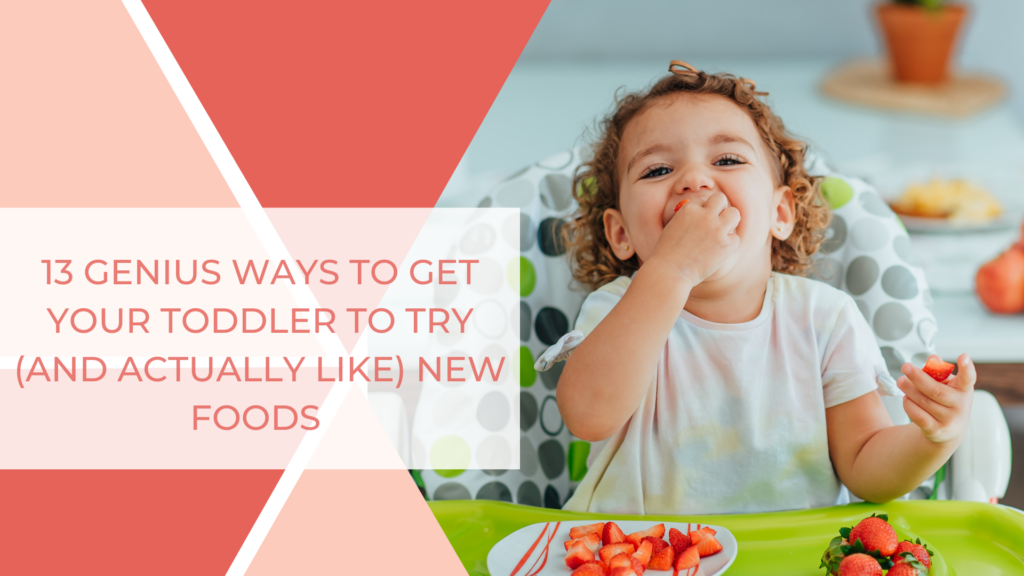
Yes, getting your toddler to try new foods—or even just eat a food they liked last week—can feel like an uphill battle.
When coupled with patience and persistence, these 13 tips can actually help your toddler not only eat, but also enjoy new foods.
Wondering what’s going on with your toddler’s eating? Is it *just* picky eating like everyone says?
We’ve got the answers to all your biggest questions about toddler picky eating.

Talk about food
Language is an amazing way to foster your toddler’s curiosity about food. Here’s a great example: A client recently told me she asked her son if he wanted to try sweet potatoes. Frustrated when he said no, she sampled them herself and described what she tasted: “wow, these are so sweet they taste like candy.” Hearing that, he asked for a bite.
Be careful here – you’re not trying to convince them to eat. Instead, you’re using descriptive words to discuss the color, texture, flavor, and temperature of foods to both intrigue them and give them more information.
This strategy is more powerful than talking about the special super powers a food can give them.
If they’re not jumping to taste, invite them to share something they notice about the food.
Give them control
Many toddlers push back when pushed, so let them take charge as much as possible. Let them decide which plate they want, how the food should be cut, or even where something is placed on the table.
Of course, your child always gets full autonomy on how much and if they eat.
Screw manners
Here are the inappropriate things my 2-year-old son does with salad dressing:
- Call it dip
- Paint with it
- Put it in his hair
- Eat it with a spoon
- Pour it all over his plate
Here are the great things that my son does with salad dressing:
- Independently ask to eat a completely novel food with a big flavor
- Dip foods in it and eat them
- Eat foods he doesn’t normally eat because they’ve been dipped
- Have a positive eating experience
- Learn about a new food
- Clean up after himself
My in-laws witnessed one of these salad dressing parties recently and kept giving me that “aren’t you going to stop this?” look.
I get that drinking salad dressing from a takeout container isn’t ideal. In my opinion, it was better to let him have a positive experience (within reason) than to limit him for the sake of manners.
When your child is exploring and taking initiative with food, this helps to improve their relationship with food, teaches them about what to expect, and can lead to eating.
So ignore the rules. Let them get messy. See what happens.
Make mealtimes magical
Okay, I’m a toddler parent, too, so I know magic is a stretch. And a lot of work. But here’s what else I know: the vibe matters. Mealtimes that feel better go better and get better results when it comes to eating.
Here’s how we keep things fun:
- Not looking at screens (here’s how you can end screen time at the table)
- Serving family style (try using cool utensils)
- Playing music
- Not asking my son to eat
- Acting like we don’t care about his eating (see below)
- Giving him control and options when appropriate
- Offering dips and “sprinkles” (like cheese, seeds, etc) when appropriate
Act like you don’t care
Whenever I don’t offer something to my son or when I go into a meal with the lowest of low expectations, that is when he tries something new – and actually seems to like it.
I’m surprised and amazed every time.
Why does this work? I’m not exactly sure. I have a feeling that when kids are in total control of their intake, they feel free to eat and explore on their own terms. And that can make all the difference (see the salad dressing experience above).
Here are two ways you can practice this:
Don’t offer – I can’t tell you how many times this has worked for me. Just this morning actually. I offered my son oatmeal for breakfast and got a big fat no in response. An hour later, I’m eating oatmeal and guess who suddenly wants it?
Now it’s not just because he’s the son of a feeding expert. This has worked for families in Eating with Ease, too.
There is something so irresistible about food that’s off the table. As soon as they can’t have it, they want it.
Whether it’s with something you’re eating or preparing, give this a try. You might be pleasantly surprised.
Walk away –This couldn’t be simpler. Just remove yourself from the situation. I typically do this when my son is hangry and resisting a snack. While he’s involved with whatever activity he’s involved with, I put down a plate of food and walk away. That way, not only am I not there watching him, the food isn’t even his primary focus. It’s a way to make absent-minded eating work in your favor.
Make a change
I love a good mealtime routine, but if you’re feeling stuck and want your child to eat, don’t underestimate the power of a little novelty.
Change up where you’re eating. Stick them in the stroller or a learning tower. Have a picnic – in a park or on the floor (going outside can be particularly helpful). Stop by a farmers market or check out the samples at Costco.
Change up what you’re eating with. Try using giant utensils or silly toddler-sized ones. Serve dinner in a muffin tin or a grownup plate.
Start with foods they like
Starting from a place of comfort and familiarity makes eating new foods easier. What does this mean?
Swap a preferred food for something similar – say pear in place of their usual apple. Or make a small change to one of your child’s safe foods. Try a different kind of bread for their usual PBI or adding a small slice of banana with the jelly. Think of pairing familiarity with variety and start small. Over time, small changes will lead to completely novel foods.
Another way to capitalize on your toddler’s preferences is to offer food with the same qualities that they’re already enjoying. For example, if your child prefers crunchy foods and you want to introduce more fruits and veggies, starting with apples and raw carrots will probably be easier than trying bananas and baked sweet potatoes.
Whenever introducing or adjusting a preferred food, explain what you are doing. No secret swaps!
Model
This alone may not be enough but do not underestimate its value. Toddlers are watching and soaking things up. So if you want them to eat veggies and like them, make sure they see you eating veggies and liking them.
Talk about something other than eating at meals
When your child’s eating, whether you’re sharing the meal alongside them or just keeping them company, turn your focus to something other than what they’re eating.
Don’t ask if they’ve had enough or let them know that you’ve noticed they haven’t touched their peas.
If this feels weird to you, I get it. Instead of talking about what they’re eating, start a fun conversation or try a fun table-friendly game to fill the space.
Don’t sweat them not eating
It’s normal for things with your toddler to change day to day. That means their appetite and preferences. You can never really know what to expect.
I get that it feels freaky when your child skips a meal. And it’s downright terrifying when they eat poorly for days on end.
I want you to zoom out. Instead of worrying about each individual meal or even a single day, I want you to look at things over the course of a week.
Let them get hungry
Toddlers have the amazing ability to regulate their intake based on appetite. Which means if they’re not hungry, they’re not eating. This is especially true with non-preferred and new foods.
Let hunger work for you.
Make sure you’re sticking to a mealtime schedule instead of letting them graze throughout the day.
Make sure it’s yummy and looks yummy
It can be so easy to forget this very obvious detail. Toddlers are human, too! They want their food to taste good. And before they can figure out if it tastes good, it needs to look good enough for them to want to taste.
You don’t have to go all Pinterest Mom on making food look tasty. Sure, you can add a food pick here and cut something in a cute shape there, but regular old cooking and using fun plates works just fine, too.
Give it time
The average child needs around a dozen exposures to a new food before they’re ready to taste. And after that they might need a dozen more tastes before developing a preference.
Which is to say this will take time. You need to keep offering food. I tell my clients to be patient and persistent.
Additionally, if you’re making major changes to your eating routine or environment, it will take time to “undo” what you were doing before.
BONUS: Remember it’s not just one thing
It’s all these things put together.
Talking about the food to spark curiosity won’t help if your child is feeling pressured to eat.
Changing things up by eating outside might not work if your child is meeting a new food there for the very first time.
Food can look unbelievably tasty to you, but if it’s so different from foods your child is comfortable with, they might need a lot more time.
So, while helping your picky toddler try and actually like new foods is all of these things, there’s no way you can focus on every single one at once.
Focusing on how mealtimes feel, not placing too much focus on what and how they’re eating, modeling the eating you’d like to see, and optimizing their appetite – these can be at the foundation of what you’re doing daily. Work on these first.
To that foundation you can add changing things up, letting them explore and get messy, using descriptive language to foster curiosity and more.
Next steps:
If you’re reading all this, nodding your head and thinking “yeah, this looks great” and also “but how do I actually do it all?”, I hear you.
It’s a lot to break the cycle of how things have been going and start something new. It’s easier when you have a plan and guidance.
If you’re looking for a step-by-step plan and personalized feedback for your picky eater, consider the Eating with Ease Program for Toddlers & Little Kids (doors are opening next month) or see if VIP coaching is right for you.


0 Comments