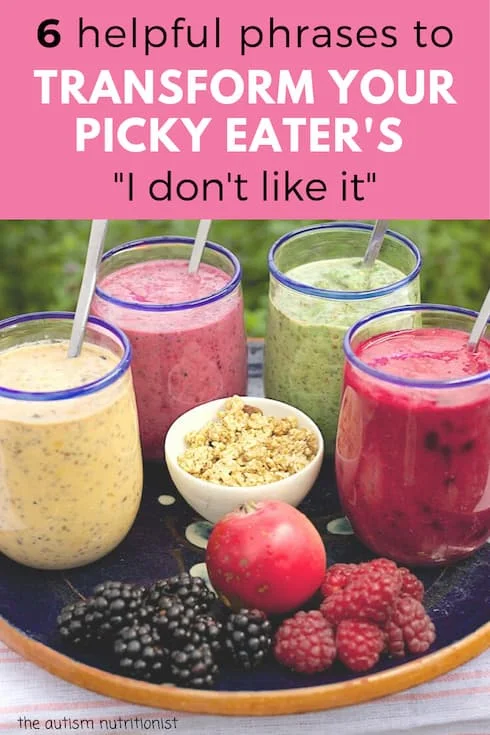
What should you say when your picky eater tells you I DON’T LIKE IT?
Your response can keep them in the “I don’t like it” zone or it can help them move forward.
I like responses that suggest the possibility of them one day feeling differently. Let your child know that there’s a future where they will eat a variety of foods.
Helpful responses communicate that taste is a learning process, just like learning to read or ride a bike.
It’s always best to respect your child’s feelings and not force them to eat – even if you know they really do or really would like a food you’re offering.
Respecting their feelings builds trust so that one day they can feel comfortable to eat.
Try out one of these six helpful responses the next time your child says “I don’t like it.”

What to Say When Your Child Says “I Don’t Like It”
-
You’re still learning
-
Eating is a skill and it’s one that can take some time. Your child might understand what learning is, so this can be a helpful way to frame their eating. They know that learning can be hard and then it gets easier and more comfortable. Eating will also get easier and more comfortable.
-
-
You don’t like it yet
-
The word “yet” is so important and places emphasis on the fact that your child’s eating will continue to evolve.
-
-
You don’t have to eat it today
-
This takes the pressure off. Kids often get uncomfortable thinking they have to eat. When they know that they will not be pressured, they feel more comfortable being around the food or eating other foods.
-
-
That’s fine. Let’s get comfortable with it first
-
Again, you’re taking the pressure off of eating and demonstrating the steps they can take that will lead to eating. Getting comfortable having a food around is the first step.
-
-
It can take time to learn
-
Your child again hears about the learning process. You’re reinforcing that they can move at their own pace.
-
-
I like it. This is how I like to eat it
-
You’re modeling how to eat the food and showing them that eating might not create a negative reaction.
-
Recap
Many picky eaters automatically respond to new foods saying “I don’t like it.” Your response can change their mindset about eating and new foods. Choose to respond with phrases that describe eating as a learning process and suggest a time when your child will like new foods.
Homework
Try out one of the six phrases above at the next opportunity. Use these regularly when your child suggests they don’t like a new food that they have never tried.


0 Comments