
Three children can push away the same bowl of pasta for completely different reasons. One can’t stand looking at the sauce because it’s too “wet.” The other got sick after eating pasta when they were three and now associate it with vomiting. A third child simply isn’t hungry and never really is.
From the outside, all three look like a picky eater. On the inside, they’re dealing with different problems that need different responses.
I’m a registered dietitian who specializes in ARFID and pediatric feeding, and helping families figure out why their child refuses food is the core of my work. Food refusal is shaped by sensory experiences, emotions, past experiences with food, the mealtime environment, and a child’s overall relationship with eating. Persistent food refusal can sometimes be linked to a feeding difficulty or to ARFID, however picky eating is not an eating disorder.
This post is educational, not diagnostic. If your child’s eating challenges are persistent, worsening, or affecting their nutrition, growth, or daily life, you may need to seek professional assessment.
Psychological Reasons For Food Refusal In Children
Food refusal almost always has an underlying reason. Once you understand it, strategies stop feeling like guesswork and they start working.
Identifying a possible reason is not the same as diagnosing your child. The patterns below are common drivers that parents and clinicians notice. Many children show more than one.
Common Psychological Reasons Children Refuse Food
These are possible factors to consider, not a checklist for diagnosis.
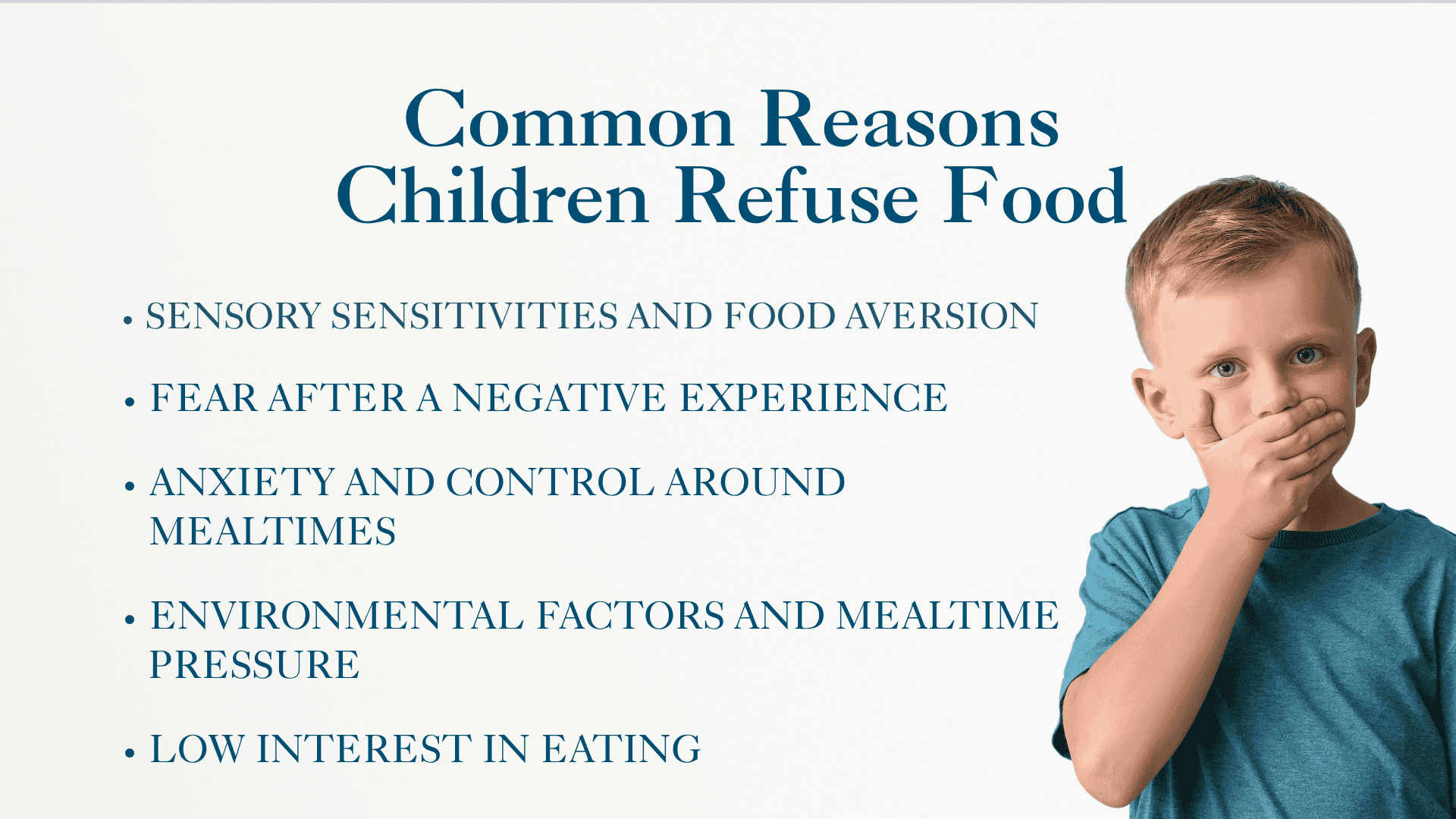
Sensory Sensitivities and Food Aversion
Some children experience the taste, texture, smell, temperature, or appearance of food more intensely than others. This is a difference in sensory processing or how the brain receives and interprets information from the senses.
For a child with sensory sensitivities, a lumpy yogurt or a mixed-texture casserole can feel genuinely overwhelming and gross. The result is a food aversion, a strong, physical “no” that goes well beyond dislike and also isn’t defiance. Refusal is the nervous system protecting itself from an input it reads as too much.
Children with sensory issues often gravitate toward foods with predictable tastes and textures, like a specific brand of crackers that tastes and crunches the same way every time.
Fear After a Negative Experience
A choking scare, a bout of vomiting, painful reflux, or an allergic reaction can leave a lasting imprint. The brain learns that eating, or eating a particular food, is dangerous.
That fear can persist long after the original event and may apply to other foods. A child who choked on a grape may refuse all round foods. A child who vomited during a stomach bug may refuse whatever they ate that day, then gradually widen the list of “unsafe” foods.
Fear-based refusal may appear suddenly and it may not have a precipitating event. Some children harbor a vague but real fear that “something bad will happen” if they eat certain foods or they may have a general worry about eating non–preferred foods.
Anxiety and Control Around Mealtimes
For some children, the table is where anxiety shows up most clearly. A child who feels anxious in general may experience meals as unpredictable and stressful or may worry about the experience of eating new foods.
Food is also one of the few areas where a young child has real control. When other parts of life feel uncertain, refusing to eat can be a way to create a sense of comfort and calm.
Environmental Factors and Mealtime Pressure
Environmental factors include everything happening around the food: noise, screens, the pace of the meal, who’s at the table, and how others respond to eating.
Pressure is the factor that often backfires. Coaxing, bribing, praise for bites, showing visible disappointment or relief related to a child’s eating, “just one more,” and dessert as a reward all put focus on what the child is or isn’t eating. For a child who is already hesitant, that focus raises anxiety, and anxiety suppresses appetite. The harder the push, the more likely a child is to refuse to eat.
Low Interest in Eating
Some children don’t seem to care about food. They forget to eat, eat very little, or feel full after a few bites.
Low interest in eating can reflect a small appetite, difficulty noticing hunger signals, distractibility, discomfort with the feeling of fullness, or an underlying medical issue.
Is Food Refusal a Sign of ARFID in Children?
Sometimes, but not usually. Most food refusal falls within the range of typical picky eating, especially in toddlers and preschoolers.
ARFID, or Avoidant Restrictive Food Intake Disorder, is a recognized eating disorder in which food restriction is driven by sensory sensitivities, fear of negative consequences, or low interest in eating. It is not driven by body image or weight concerns. If you’re new to the diagnosis, this overview of what is ARFID covers the basics.

The difference between ARFID in children and typical picky eating comes down to degree and impact. With ARFID, the list of accepted foods is often very short and may shrink over time. Whole food groups or textures are avoided. And the restriction affects nutrition, growth, energy, or daily life, such as skipping school lunch or avoiding parties because of the food.
The three drivers of ARFID map closely onto the psychological reasons above, which is why clinicians describe three types of ARFID: sensory-based, fear-based, and low-interest.

Persistent or severe restriction should not automatically be dismissed as a phase. For a side-by-side breakdown, see ARFID vs picky eating, along with this guide to the signs of ARFID in children. Only a qualified professional can make a diagnosis, so bring your concerns to your child’s doctor.
What Can Parents Do When a Child Refuses to Eat?
The strategies below support children across all of the reasons above. They are general guidance, not a treatment plan, and they work best when used consistently over weeks and months. For texture-specific strategies, this post on how to help a picky eater with texture aversions goes deeper.
Keep Mealtimes Low-Pressure
Remove the commentary about eating: no bribes, no bite counts, no praise for trying. Keep the conversation on anything other than food.
Lower pressure lowers anxiety, and a calmer nervous system is more open to food. Low-pressure doesn’t mean no structure. Regular meal and snack times still matter, especially for children with low appetite.
Offer Foods Without Forcing
Serve new or less-preferred foods in small amounts, alongside at least one food your child reliably eats. Let your child decide whether to touch, smell, taste, or ignore it.
Repeated, neutral exposure builds familiarity, and familiarity reduces fear. Some children need many exposures before they’re ready to taste something new. For a child with a strong fear of new foods, known as food neophobia, simply having the food on the table is meaningful progress.
Respect Sensory Needs
Work with your child’s sensory profile rather than against it. If they prefer crunchy foods, look for crunchy versions of new foods. If mixed textures are hard, serve components separately in deconstructed meals.
Small accommodations like a divided plate or a separate bowl for sauce can make a meal manageable. These aren’t indulgences. They create the conditions that make trying new foods possible.

Eat Together and Model
Children learn about food by watching the people around them. Eating together, and eating a variety of foods calmly and without comment, shows your child what relaxed eating looks like.
You don’t need to narrate or sell the food. Your child is taking it in even when they aren’t eating it.
Work With Professionals When Needed
When refusal is persistent, a team can help. A registered dietitian can assess nutrition and build a plan for expanding foods. Occupational therapists can address sensory processing and oral motor skills. A pediatrician monitors growth and rules out medical causes, and a therapist can address anxiety.
Evidence based approaches for significant food refusal, such as graduated food exposure and cognitive behavioral therapy adapted for ARFID, work best with professional guidance.
When to Seek Professional Support
If food refusal is persistent, worsening, or affecting your child’s nutrition, growth, or daily life, a professional assessment is worth getting. Start with your pediatrician, a registered dietitian, or a feeding specialist.
Other signs worth raising: frequent gagging or vomiting around food, a food list that is getting shorter, weight loss or slowed growth, or meals that routinely end in distress.
Where to Start
The free 3 Steps to Eating guide is a practical starting point for any family dealing with food refusal. It walks through the low-pressure framework used with extreme picky eaters and children with ARFID, in a format you can start using at home this week.
Download the free 3 Steps to Eating guide


0 Comments