
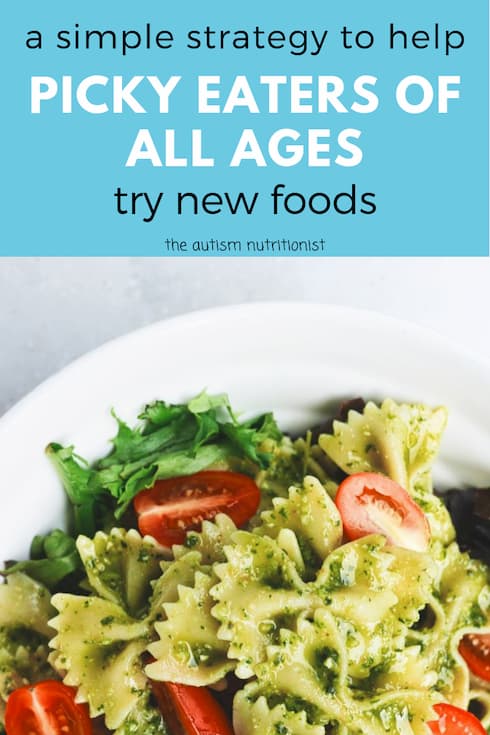
It’s been a while since we’ve talked about food chaining, a strategy that creates links between preferred foods and new foods to help picky eaters expand the variety in their diets.
It’s like creating a bridge from a preferred food to a new one. But it doesn’t matter what you call it. This principle is key to introducing new foods to picky eaters.
Before diving into the details, let’s set some ground rules.
The idea behind food chaining and teaching your child to try new foods is to introduce small changes to preferred foods with the goal of transitioning to new foods.
Food Chaining for Picky Eaters
How you do this depends on the severity of your child’s picky eating and developmental stage.
Picky eating is a spectrum. If your picky eater is very severe or if your picky eater has very severe autism, these changes need to be minuscule at first. If your child is more flexible, older, or has less severe eating issues, these changes might be more abstract or more noticeable.
How to Teach Your Picky Eater to Try New Foods
- Pick one of your child’s favorite foods. Identify the color, texture, taste, shape, and flavor.
- Make a change to one of these areas. For example, if your child is used to eating sandwiches cut in two rectangular halves, cut it instead in triangles. Or, if your child loves Goldfish, try offering a different color, flavor, or a new brand like Annie’s Cheddar Bunnies.
- It might help to offer the new presentation alongside the original preferred version.
- When your child eats the new presentation without an issue three times on at least three different days, you can make another change.
- As your child gets more comfortable your child gets with new foods, you can make the changes bigger and bigger.
How to Adapt Food Chaining for Severe Picky Eating and Autism
Kids with severe ASD are likely going to be very sensitive to ANY change to their favorite food.
This technique will need to be dialed back and may also work best with additional education.
A good trick for more severe eaters is to keep the color the same for as long as possible. Color is often one of the main ways a child identifies their food. A color change can be extremely off-putting and may make it challenging for a child to identify any similarity to their favorite food.
Remember that the key to success is making just ONE change every time. If your child is struggling with a new food, backtrack to the last preferred food to reestablish comfort before moving on again.
Recap
Picky eaters can learn to eat new foods. A helpful way to introduce new foods to a picky eater is to make one small change to a preferred food. This strategy is known as food chaining. It’s like building a bridge from a preferred food to a new one. This picky eating strategy can take some thought and preparation on your end, but it will eventually help your child feel more comfortable with new foods.
Homework
Identify one of your child’s preferred foods that you can modify this week. Set up a tracker so you remember what you’re offering them, how often, and how they respond.


0 Comments