
This article discusses some reasons why a child isn’t eating at meals and provides simple solutions to help your child eat better at mealtimes.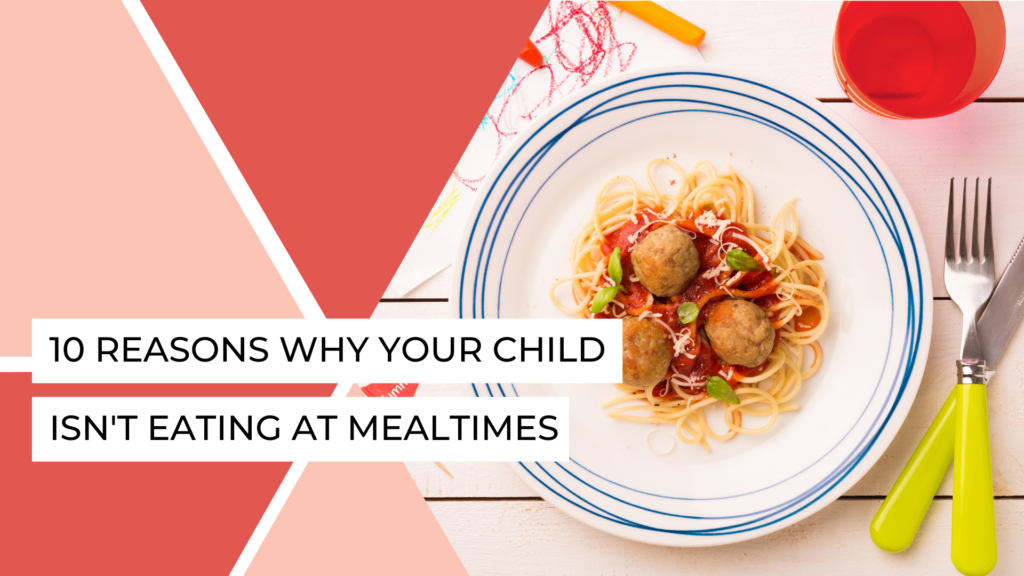
As frustrating as it is, a child refusing to eat at meals is normal.
It is defeating and annoying to spend time planning, preparing, and serving a meal that your child refuses to eat. Your instinct might be to prod your child to take a bite or even demand them to eat, yet attempts to micromanage your child’s intake at meals can create power struggles, meltdowns, and stress for everyone.
It’s helpful to remember that kids’ eating patterns are unpredictable.
Still, if you’re worried about your child’s intake there are a few reasons why your child isn’t eating at meals and some simple solutions for how you can help them come to the table ready to eat without using force or pressure tactics.
10 Reasons Why Your Child Isn’t Eating at Meals (and Simple Solutions to Help Them Eat Better at Mealtimes!)
1. They’re not hungry
Maybe they’re not hungry today. Maybe they filled up on snack food or they grazed all day long and are no longer hungry.
Solution: Spacing out meals a few hours apart and limiting grazing throughout the day. Sticking to set mealtimes and limiting all day snacking can optimize your child’s appetite so they feel hungrier at mealtimes.
2. They feel pressure
As a parent, you know what’s best for your child. This sometimes translates into trying to micromanage your child’s eating at mealtimes. Pressure to eat often backfires, especially for extreme picky eaters. The more a child feels your desire for them to do something, the less they want to do it.
Solution: Respect your child’s instincts. What and how much they eat from the meal you serve is up to them. Instead of pressuring them to eat, aim to make them feel comfortable at mealtimes. If you notice patterns about their eating habits you can adjust what you serve and/or how often you’re serving meals and snacks.
3. They feel out of control
Many of the extremely picky eaters I work with feel anxious at mealtimes. This can stem in part from feeling a lack of control, where every decision seems like it is made for them.
Solution: Ask for your child’s input – would they prefer rice or pasta? Let them know the menu ahead of time.

4. Sensory overwhelm
Many of the extremely picky eaters I work with have sensory integration issues that can make it difficult for them to be around non-preferred foods or sit with others while they’re eating. Smells, sounds, textures, tastes, and even the sight of foods can make them uncomfortable (they might feel things more strongly!). Additionally, if there’s too much going on, they might feel distracted and unable to give eating the attention it needs.
Solution: Mealtimes are for eating, so eliminate distractions during meals and create a comfortable, consistent environment where eating is the main focus. Pay attention to your child at mealtimes. Do you notice certain triggers that set them off – a smell or certain texture? When you identify what is in your child’s way of eating comfortably, brainstorm ways to make adjustments to help them feel more comfortable at mealtimes.
5. There’s nothing they can eat
Often extremely picky eaters would rather not eat than eat something they have an aversion to. If your child does not have a preferred food available at mealtimes, they might choose not to eat.
Solution: Always serve at least one of your child’s preferred foods at every meal so they can comfortably eat something if they are hungry.
6. Their chair isn’t supportive
Eating requires a lot of work! If your child does not have a supportive chair to sit on they might be using all of their energy to sit instead of eating.
Solution: Check to see that your child can sit comfortably at meals. The ideal chair provides 90-degree support at the hips, knees, and feet. You can add a booster behind their back or under their seat or feet if their chair does not provide it.
7. They’re not ready to sit
When a child isn’t eating at meals, they might not feel ready to sit and focus on food. Transitioning from one activity to another can be tricky, especially when the new activity is eating, which requires a lot of sitting and focus and might feel uncomfortable.
Solution: Consider offering a warning before mealtimes or creating a transition period so your child has time to prepare for a meal. You might want to think about having your child do some heavy work or physical activity before mealtimes to help them feel more regulated and ready to sit and eat.
8. Too much milk, juice, or water
If you have a child who isn’t eating at meals, don’t forget to consider fluids when looking at their intake. Beverages take up a lot of room in the stomach. Kids who drink a lot, especially of a nutritive beverage like milk, will be less hungry for food or will feel too full to eat.
Solution: Separate eating and drinking times. Don’t offer beverages before a meal. If your child tends to drink a lot during a meal, introduce the beverage midway through the meal after they have had a chance to eat.
9. Eating doesn’t feel good
When a child isn’t eating at meals, it’s possible that eating doesn’t feel good. Uncomfortable eating can be the result of sensory sensitivities, food intolerances, oral -motor deficits, and belly issues like constipation or reflux. Discomfort while or as a result from eating isn’t the most common factor on this list, but it’s always a possibility.
Solution: Watch your child for signs of discomfort. Have they had a recent bowel movement? Are they having any reaction while eating or immediately after? Consult with your child’s pediatrician. You might want to request a referral to an occupational therapist and a speech therapist to assess your child’s ability to eat comfortably and successfully.
10. Eating is too hard
Eating can be really really tough, painful, and scary for many kids with severe food aversions and a lot of anxiety around food. Your child might be holding on to trauma from previous eating experiences or might not know how to handle new foods at the table.
Solution: If you think this might be the case, consult a feeding specialist.
Recap
It can be common for kids to not eat at mealtimes. That doesn’t make it any less frustrating! Common reasons for mealtime refusal can be lack of hunger and discomfort while eating.


0 Comments