
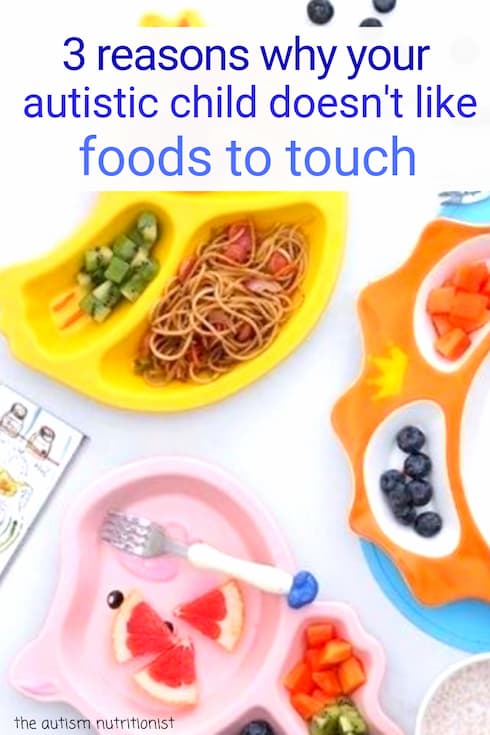
What is it about autistic kids and food touching?
One of the frustrations of feeding a picky eater with autism is that eating isn’t always about the taste of food or even the texture. Often, the reason why your child isn’t eating has to do with presentation.
While there are many eating idiosyncrasies and while none of these are universal, in general, autistic kids have been known to prefer specific food brands, might eat only in particular locations or from particular plates, and will only eat food if prepared just the right way. Food prep can include how a food is cooked and also how it is presented – Is it mixed? Is it too saucy? Too toasted? Is there too much? Are foods touching?
If you can relate to any of these scenarios, you’re in the right place.
This article discusses three reasons why your picky eater with autism doesn’t like to eat foods that touch.
3 Reasons Why Kids Don’t Like Foods to Touch
Preference for sameness and order
Mixed food and foods that touch are inconsistent and unpredictable. Whereas separated food is more predictable and orderly. With so many kids with autism gravitating towards sameness and routine, it’s not surprising this preference carries over to food and eating preferences. The desire for food to be presented a certain way may also relate to a desire for control.
Food anxiety and picky eating
Picky eaters often have fear and anxiety around food and eating. They worry about what will happen when they eat foods they think they don’t like. When foods are touching, it can be difficult to see exactly what you are going to eat. When foods are touching, there’s a greater chance you could eat a mixed bite. What if there’s secretly a vegetable hiding behind that bite of chicken nugget? That could be unsettling to a picky or anxious eater.
Sensory processing
Eating and even just looking at foods that are touching can lead to sensory overload to a child who has a sensitive sensory system. Mixed textures are harder for the body to process and require advanced oral-motor skills. It can also be hard to visually process all of the textures and colors of mixed foods. Finally, when foods are mixed and touching, it might be difficult to anticipate what they will taste like and how they will make the body feel. Mixing foods may also change the texture or flavor of foods, which can be hard to both anticipate and process.
Recap
Many autistic kids don’t like to eat foods that are touching. Three possible reasons include a preference for sameness, eating anxiety, and dysregulated sensory processing abilities.
Homework
If you’re struggling to improve your autistic child’s eating and are looking to expand his or her diet, let’s talk. Set up a call to see if you’re a good fit for my autism nutrition program.


0 Comments