
As a registered dietitian specializing in extreme picky eating and ARFID, I hear some version of this question all the time: why won’t my child eat anything wet, mixed, or mushy?
Sensory food aversions and texture preferences are a common barrier to a balanced diet for many kids, including kids with autism spectrum disorder. Research suggests that anywhere from 30 to over 50% of autistic children refuse foods based on texture, and texture-driven food refusal shows up often in kids without an autism diagnosis too.
A parent came to me recently with exactly this question: “My 4-year-old will only eat dry food. How can I incorporate wet foods and sauces or dips?” It’s one of the most common patterns I see in my practice.
I have a few tips for expanding the textures and types of foods a sensory-averse child will eat.
Sensory Food Aversion in Autism
What Are Food Aversions?
A food aversion is a strong, involuntary reaction to a specific food or food property, usually texture, smell, or appearance. A child with a texture-based aversion may gag, spit out food, or refuse to bring it near their mouth, even if they’ve never tasted it.
This is different from ordinary picky eating. Most young children go through a picky phase where they prefer certain foods over others, but they still eat a reasonable variety, and their list of accepted foods tends to grow over time. A sensory food aversion is more rigid. The child eats a genuinely limited diet, often sticking to one food group or texture category almost exclusively, and the reaction isn’t about preference. It’s a physical response, not a choice.
Sensory food aversions are common in children with autism spectrum disorder, but they also show up in children with ADHD, sensory issues, or no other diagnosis at all. When a limited diet and strong texture aversions significantly affect a child’s nutrition or daily life, it may point to something more clinical, like ARFID (Avoidant/Restrictive Food Intake Disorder), which is worth discussing with your child’s pediatrician.
What Causes Food Aversions
Food aversions rarely have just one cause. I usually see a combination of the following.
Sensory Processing Differences
Many children with sensory issues experience ordinary textures, like mixed foods or anything mushy, as genuinely overwhelming rather than mildly unpleasant. Their nervous system registers the input more intensely than most people’s, which can make a food feel unmanageable before it ever reaches their mouth.
Oral-Motor Difficulties
Some children have trouble physically managing certain textures, like chewing tougher foods or moving mixed textures around safely. If chewing or swallowing feels effortful or unsafe, avoiding the food is a logical response. This is one of the first things I rule out with families, often with the help of a speech or feeding therapist.
Gastrointestinal Discomfort
Reflux, constipation, or other GI discomfort can make eating feel unpleasant in general, and a child may come to associate that discomfort with specific textures, even when the food itself isn’t the true cause.
Negative or Frightening Past Experiences with Food
A choking scare, a bout of vomiting, or even one unpleasant experience with food can leave a lasting impression. The nervous system learns that a food, or a whole texture category, is unsafe, and that association can stick around long after the original event.
Ruling out oral-motor and medical causes is an important first step before working on textures directly. Once you know your child can safely tolerate all textures, you can focus on overcoming food texture aversion.
How To Overcome Food Texture Aversion
Texture Desensitization
I don’t like the idea of pâté. I’m turned off by the fact that meat, usually so tough and, well, meaty, shows up light, smooth, and mousse-y. It’s a little creepy to me, honestly. Even so, I could still challenge myself to try it: touching it with my fingers first, then a tiny taste, usually paired with something I already enjoy, like a slice of bread.
That’s a simplified version of the desensitization process. It’s a way to build familiarity and comfort with something new. It’s exactly what you want to do when introducing new textures to a child with sensory food aversions.
To desensitize your child to a new texture, start with interaction, not eating. The goal of desensitization is for your child to get comfortable having the food around. Have them watch you prepare it, then place it on the table during a meal. Once they’re comfortable eating alongside it, move the plate closer, and eventually place it on their plate, without touching their usual foods. From there, encourage tactile exploration, starting at the fingers and gradually moving closer to the face and mouth. Let your child work up to touching, smelling, kissing, licking, and eventually tasting.
A few extra tips:
- Keep bites small
- Use the same food every time
- Offer praise at every step
Preferred Food Vehicle
Pairing a new food with a preferred one is a common technique for working with selective eating. This is the idea behind food chaining, and it’s something I use often with the kids I work with. When you’re introducing a completely new texture, pair a small amount of it with a food your child already accepts and enjoys.
Take that dry-food-loving four-year-old as an example. I’d pair a sauce, dip, or soft food with a preferred dry food, like a chip or cracker: the tiniest dab of hummus on a cracker, or a pretzel rod dotted with peanut butter. The goal is to keep the new texture small enough that it doesn’t feel threatening, while the familiar food makes the experience feel safer.
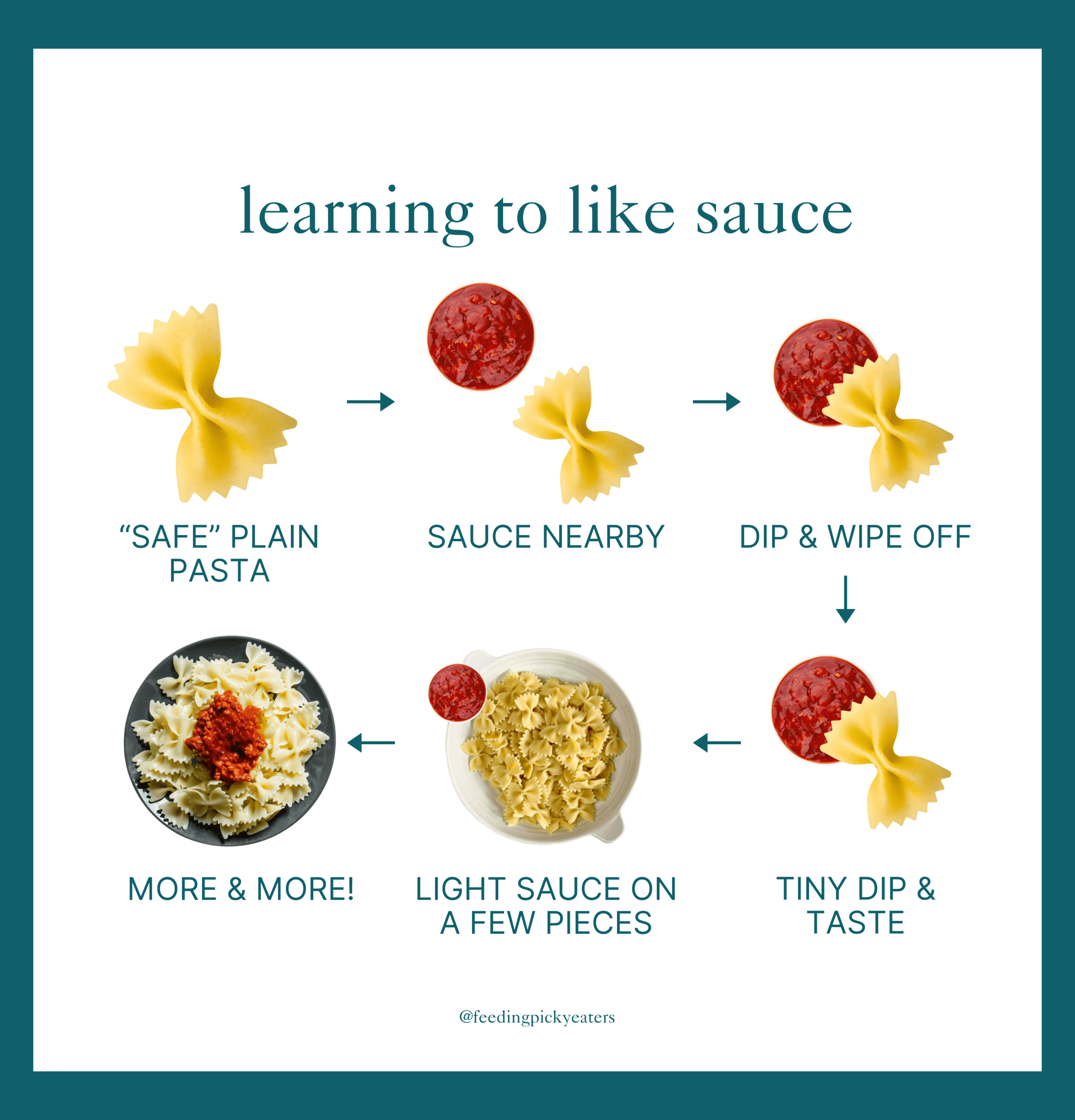
Over time, gradually increase the portion of the new texture as your child comes to accept it. If even the smallest dab feels like too much, let your child wipe it off so they’re left with their plain preferred food, then encourage them to eat that. It may not look like progress, but you’re still working through the desensitization steps above.
Gradual Texture Changes
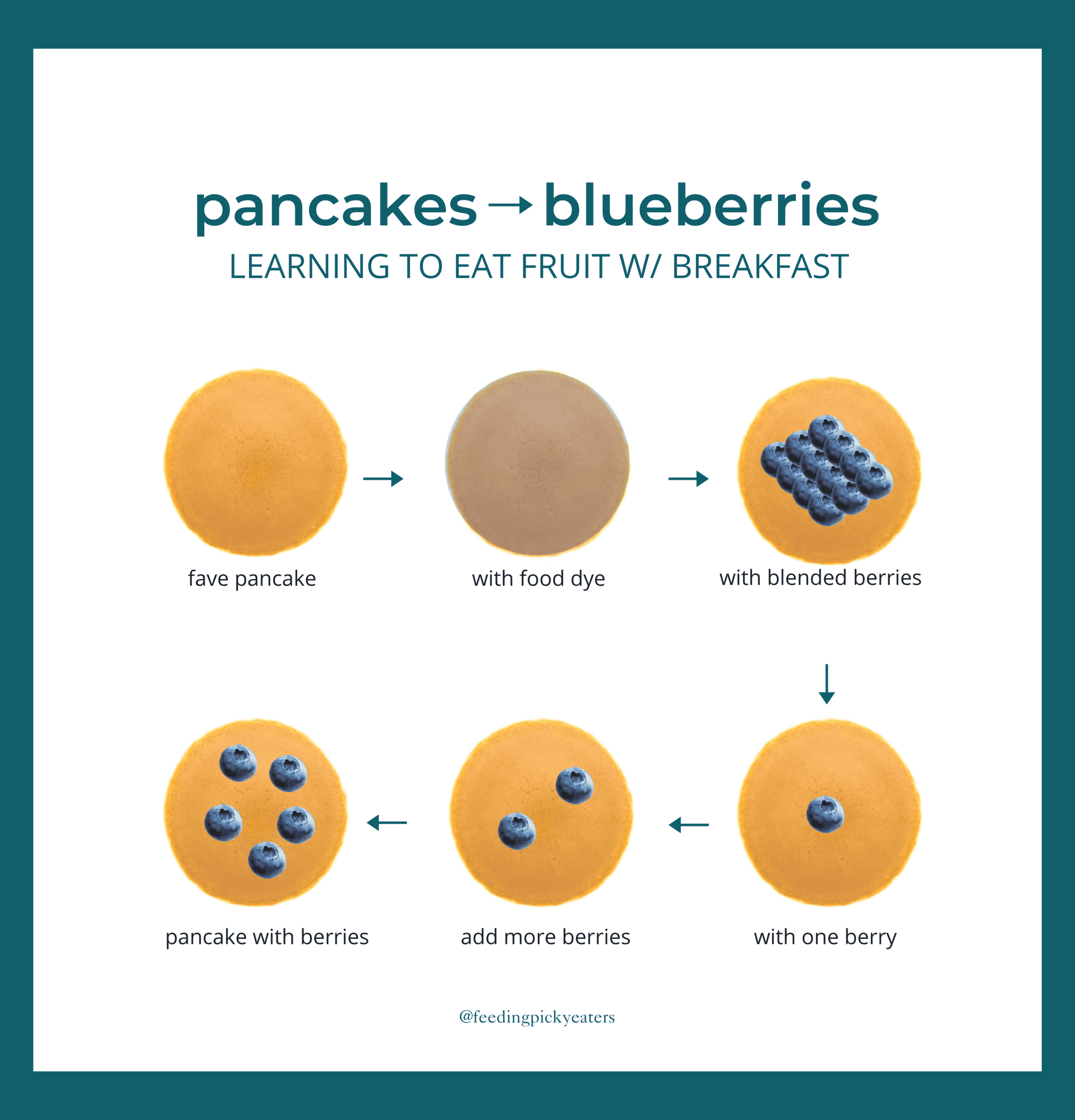
Slow, steady change is one of the most important parts of overcoming texture-based feeding challenges. Adapt a food to match your child’s current preferences, then shift it gradually. Tomato sauce and nut butters come chunky or smooth. Smoothies can be thick or thin. Start close to what your child already tolerates, and adjust in small increments as their comfort grows.
A child who avoids soft, wet foods likely won’t respond well to a smooth pureed soup or plain yogurt right out of the gate. They may feel more comfortable with a chunky vegetable soup in just a bit of broth, topped with dry, crisp croutons, or crunchy granola drizzled with yogurt. Once your child accepts these pairings, gradually shift the ratio and texture. The soup slowly becomes more pureed. The granola gets smaller and softer over time.
These techniques for overcoming food texture aversions take time. Sensory food aversions are usually deep-rooted and can come with real anxiety around eating. The strategies here are a starting point you can try at home, but there are several more strategies worth exploring, too.
If you’re not seeing progress, or your child’s limited diet is affecting their nutrition, growth, or daily life, it’s worth bringing in professional support. A team that includes feeding therapists, an occupational therapist, and a registered dietitian specializing in pediatric feeding can make a real difference, especially when ARFID is part of the picture.
This is exactly the work I do inside Eating with Ease, my program for parents of kids ages 2 to 7 navigating sensory food aversions, extreme picky eating, and ARFID. If your family needs something more individualized, I also offer 1:1 support.
Homework
Pick one of these techniques, desensitization, using a preferred food vehicle, or gradual texture changes, and try it at a meal this week. I like starting at breakfast, when energy levels tend to be higher and things go a little more smoothly.


0 Comments